
The Next Million Women Entrepreneurs Will Come From Rural India
Why India's Greatest Economic Opportunity Is Hidden In Its Villages
When a woman becomes an entrepreneur, she changes not only her own life, but the trajectory of an entire family and community.
The World's Largest Untapped Startup Ecosystem
India's self-help group (SHG) network connects over 95 million women, forming a massive foundation for micro-enterprise development. Transitioning these groups from basic saving circles to formal businesses presents a major opportunity for local economic development.
The total number of rural women integrated into self-help group networks across India.
Estimated annual GDP boost by increasing rural women's workforce and enterprise participation.
The proportion of income earned by women that is reinvested directly into family education, health, and nutrition.
Targeted self-help groups moving from basic thrift-and-credit to formal micro-enterprises by 2028.
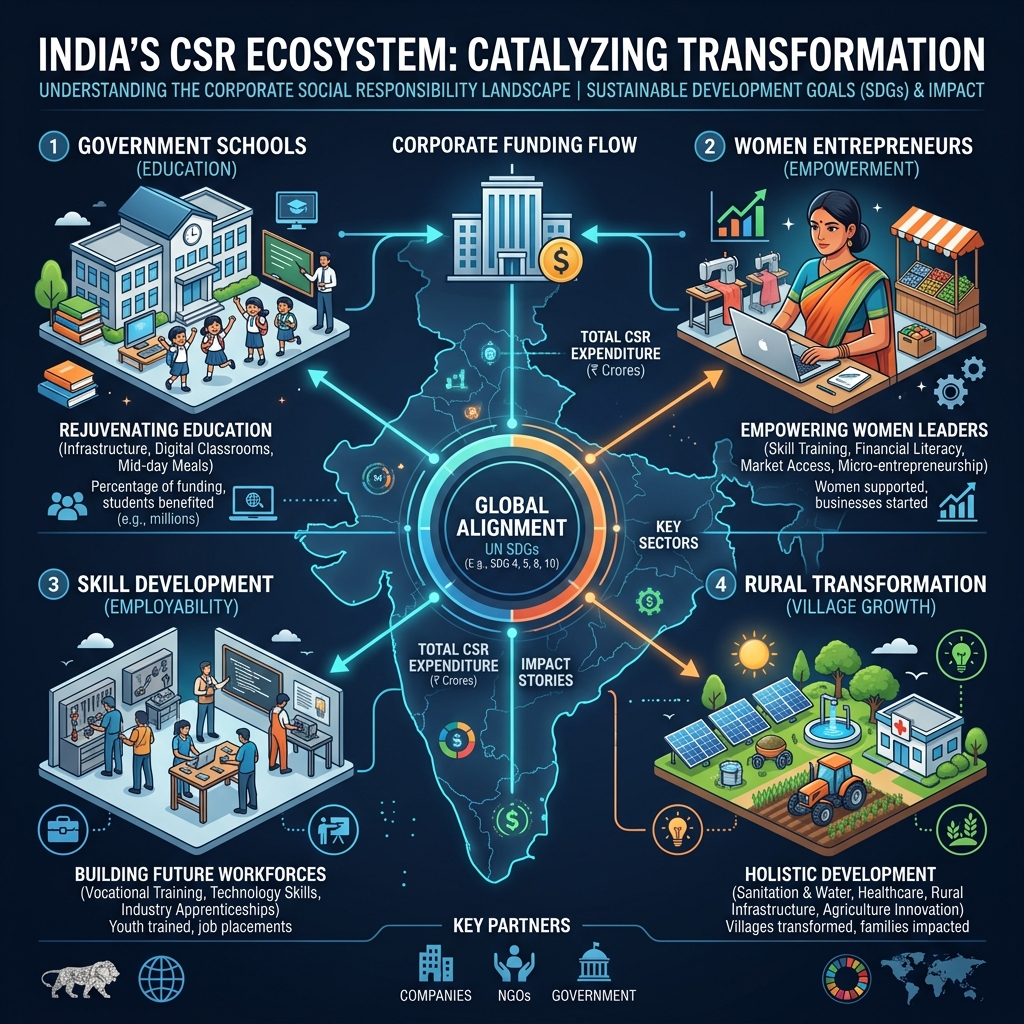
Generational Impact of Women's Income
When a woman earns an independent income, she typically reinvests a high proportion back into her family's education, healthcare, and nutrition, creating a lasting impact on community development.
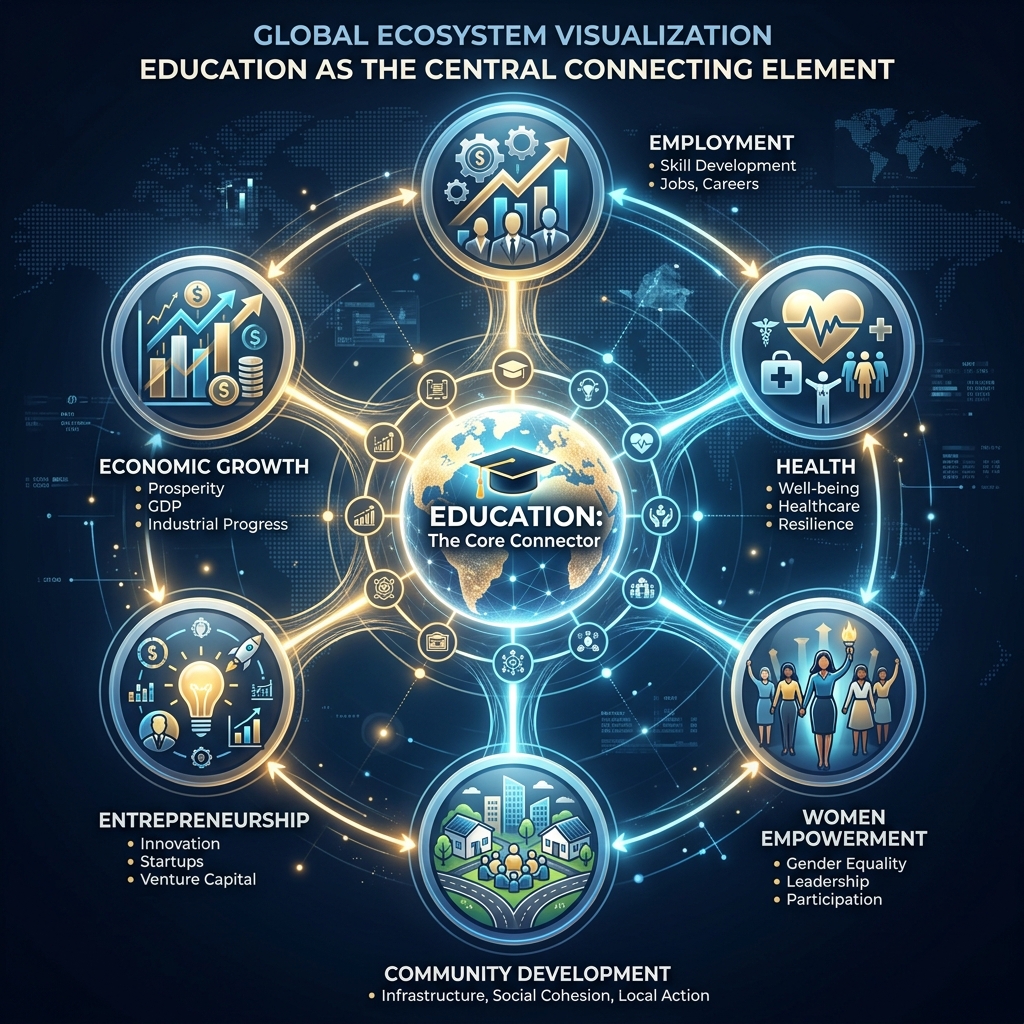
Secondary Education Impact
Prioritizing schooling for daughters
When rural women generate independent incomes, household spending on girls' secondary education and digital access increases by 40%.
Household Health & Hygiene
Preventative care spending
Independent incomes allow women to invest in healthcare, sanitation utilities, and clean cooking fuels, lowering maternal and child health risks.
Nutritional Security
Diverse diets and dairy buying
Earnings are directly allocated to purchase fresh vegetables, milk, and pulses, reducing stunting and anemia rates in young children.
Community Economic Resilience
Local financial pooling
Female-run micro-enterprises keep money circulating within rural blocks, shielding the local economy from urban market downturns.
Addressing Key Failures in Traditional Livelihood Programs
Traditional programs often focus on technical training alone, neglecting brand development, packaging design, food safety certifications, and direct marketing pipelines.
Traditional Livelihood Model
Generic Training
Focusing purely on raw sewing or basic pickle making, ignoring business design, quality control, and buyer tastes.
Zero Brand Assets
Selling items in plain polythene bags without custom labels, logos, barcodes, or food safety registrations.
Middlemen Extraction
Relying on local traders who purchase products at extremely low prices and take most of the commercial margins.
Basic Capital Access
Limited to small emergency thrift loans from self-help group boxes rather than formal bank business credits.
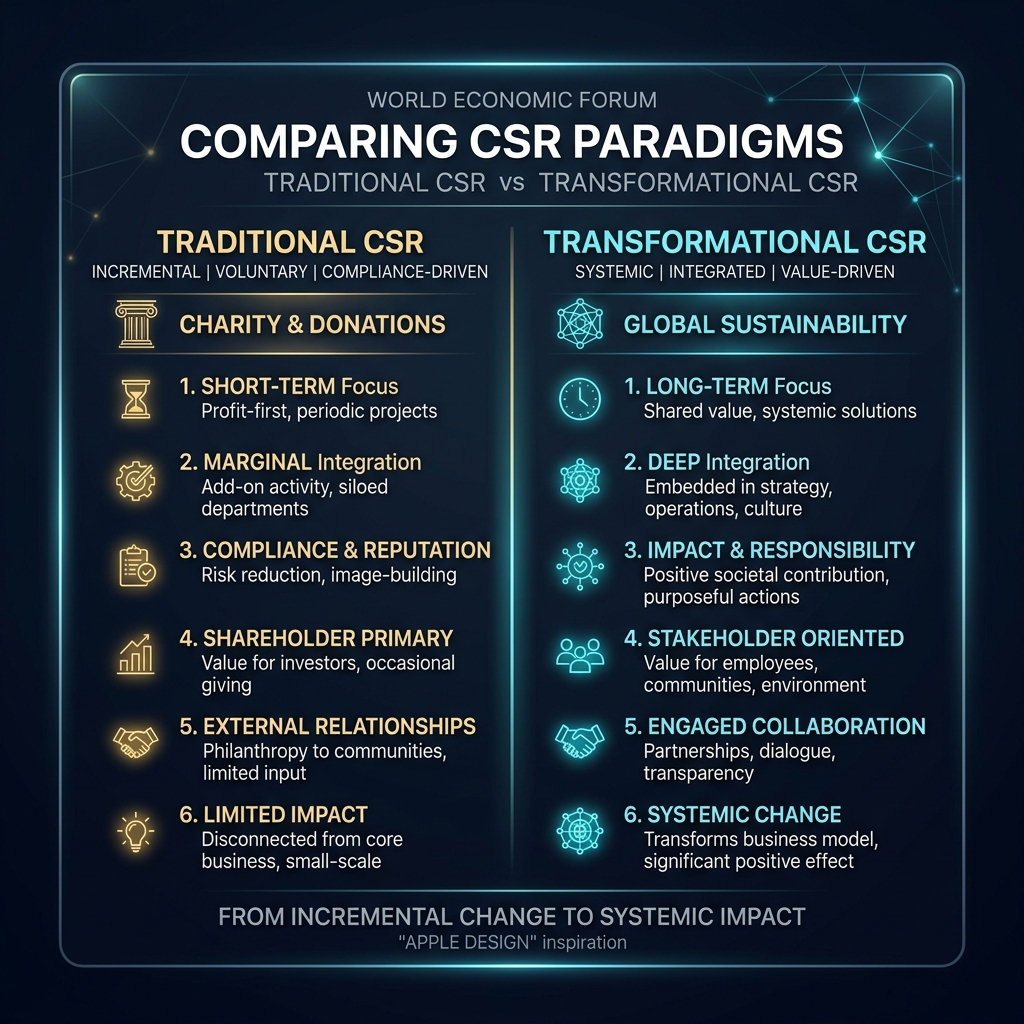
Ecosystem-Based Entrepreneurship
Market-Linked Production
Standardizing output quality to match regional specialties, modern packaging, and corporate procurement guidelines.
Integrated Brands
Developing premium brand identities, eco-friendly custom packaging, and securing FSSAI and organic licenses.
Direct-to-Consumer Channels
Selling products directly to urban buyers on specialized platforms like TalesOfSpices.com and RajasthaniHaat.com.
Formal Banking Integration
Building digital transaction histories to qualify for formal bank loans and scale community processing hubs.
Unlocking Growth in Rural Enterprises
Rural women are launching regional food brands, craft cooperatives, and digital enterprises. Supporting them with business design, packaging modernization, and marketing pipelines helps them build sustainable, community-owned enterprises.
Women-led processing centers implementing digital tracking systems.
Building Premium Consumer Brands
Our foodpreneurship program skills women-led self-help groups in operating community processing centers, standardizing quality, and utilizing eco-friendly packaging. Channels like TalesOfSpices.com and TKD.TalesOfSpices.com connect their brands directly with urban consumers.
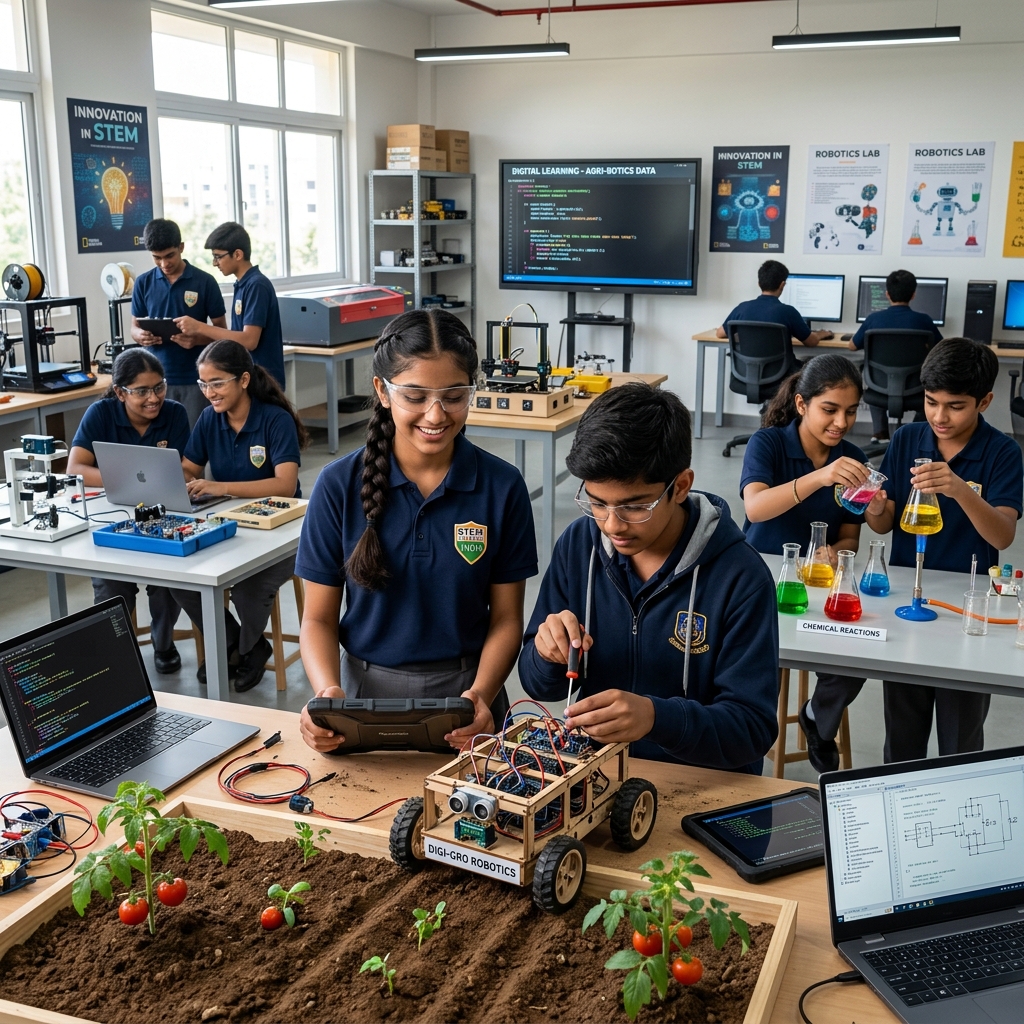
Women self-help groups packaging organic spices for direct-to-consumer digital channels.
Design Modernization & Digital Craft Markets
Traditional artisan clusters in Rajasthan and Odisha often face declining sales due to outdated palettes and lack of marketing. By providing design skilling, modern color stories, and e-commerce training, craft collectives can sell directly to premium channels like RajasthaniHaat.com.
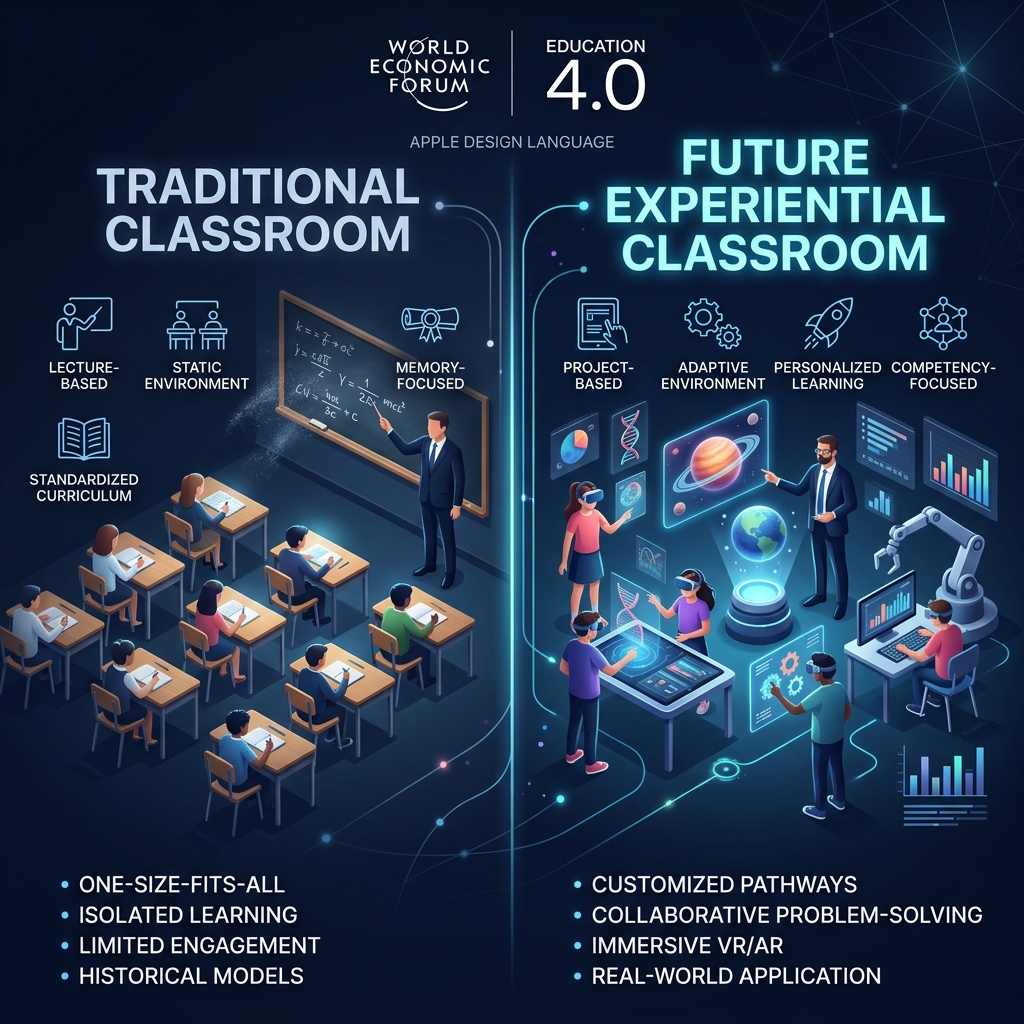
Weavers in Rajasthan implementing ergonomic looms and modern color guidelines.
Connecting Rural Producers with National Markets
Supporting women-led self-help groups with digital literacy, mobile bookkeeping software, and WhatsApp Business training allows them to sell directly on e-commerce channels and ONDC.
Women cooperative managers tracking transaction histories on mobile bookkeeping interfaces.
Introducing FutureReady Women Enterprises™
Our centerpiece model coordinates digital logic, agricultural processing, and brand design, providing rural women with verified economic opportunities.
Skills & Production
Upgrading processing capabilities, solar-powered dehydrator operations, and product quality standardization.
Design & Brand Modernization
Helping weaver and craft cooperatives modernize product palettes, product photography, and packaging design.
Digital & Financial Literacy
Teaching coding fundamentals, digital payments, and accounting ledger records to build bankability.
Direct E-Commerce Marketplaces
Connecting artisan and food cooperatives directly to national retail pipelines via RajasthaniHaat.com and TalesOfSpices.com.
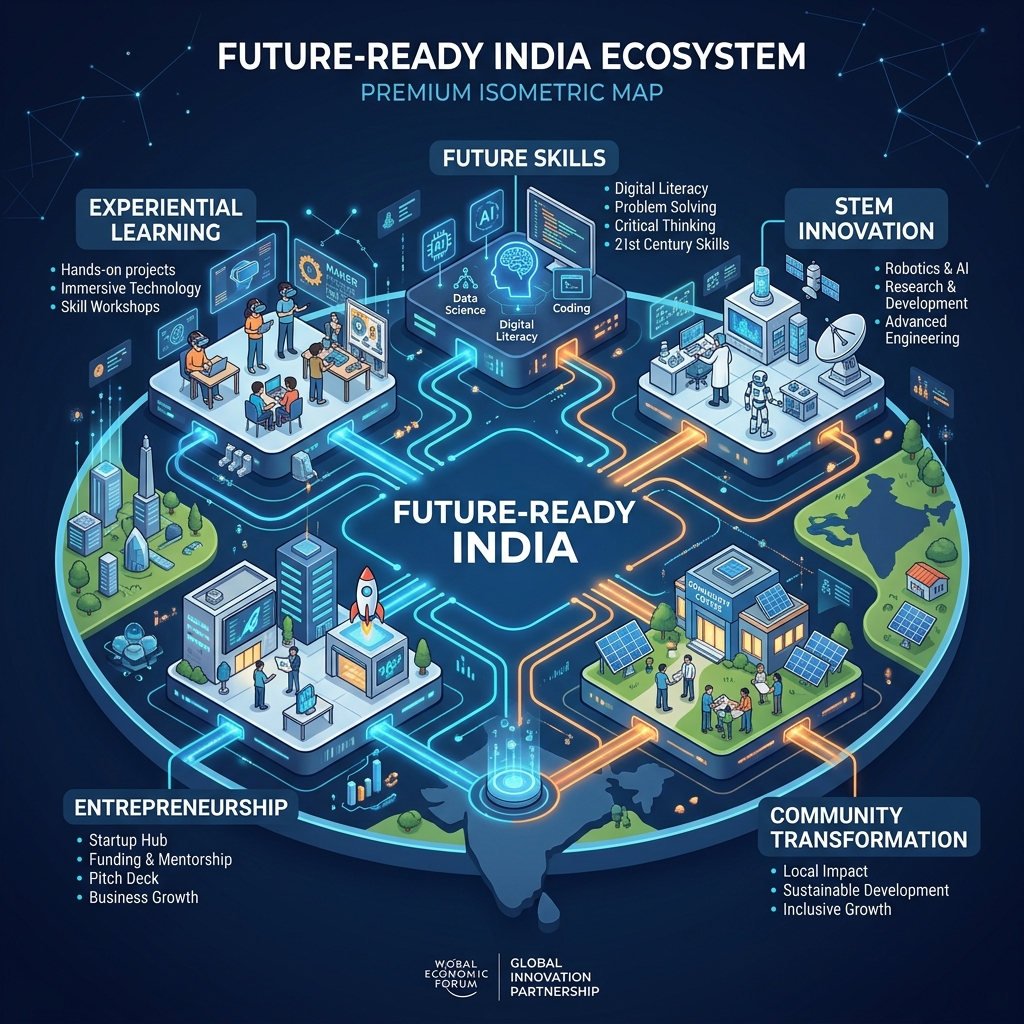
Centralized tracking connecting women-led enterprises, packaging hubs, and marketplaces.
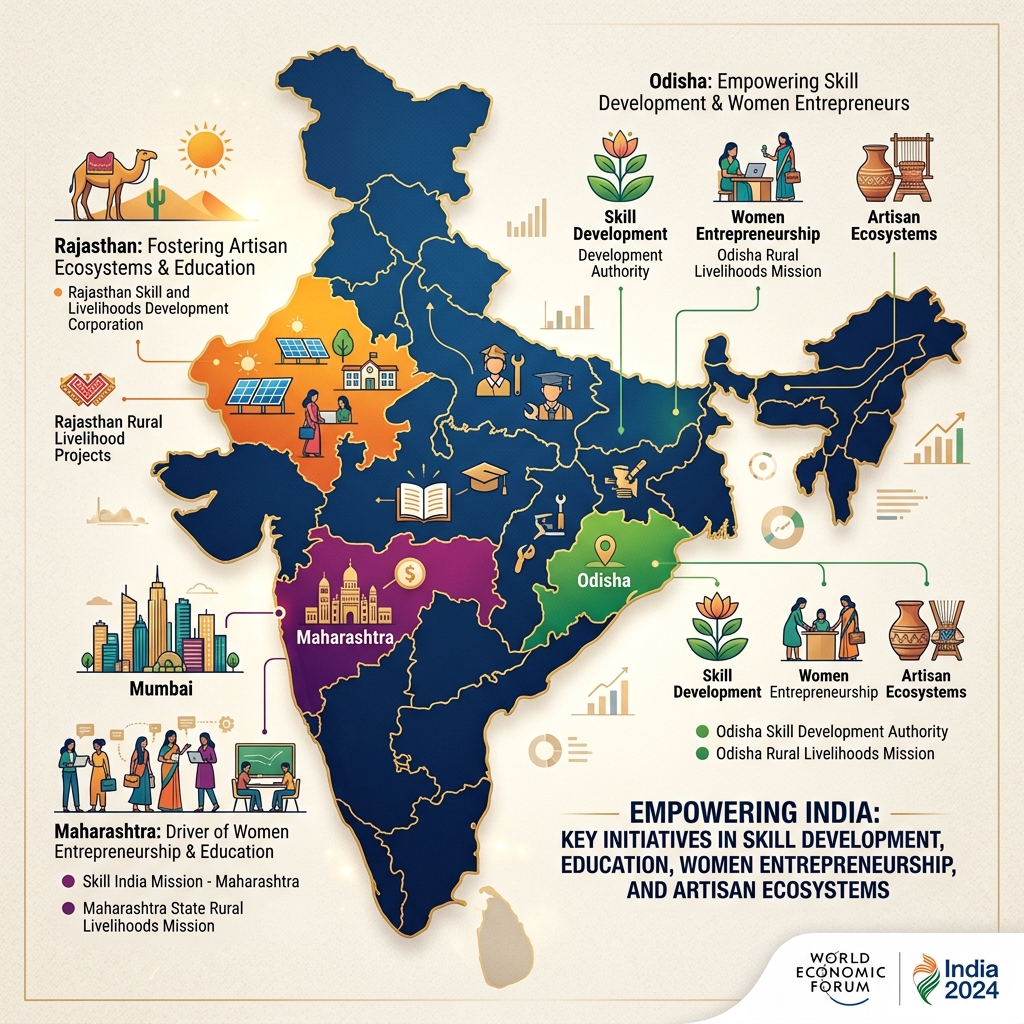
State focus areas: Women Livelihoods
We focus our programs in Odisha, Rajasthan, and Maharashtra, aligning our training modules with regional artisan, agricultural, and self-help group priorities.
Odisha
Upgrading government schools with hands-on maker spaces and offline-friendly coding platforms.
Rajasthan
Supporting weaver collectives with modern color palettes, design skilling, and direct e-commerce pipelines.
Maharashtra
Helping women's self-help groups digitize ledger records, standardize processing quality, and register formal businesses.
Our Vision for Rural Livelihoods
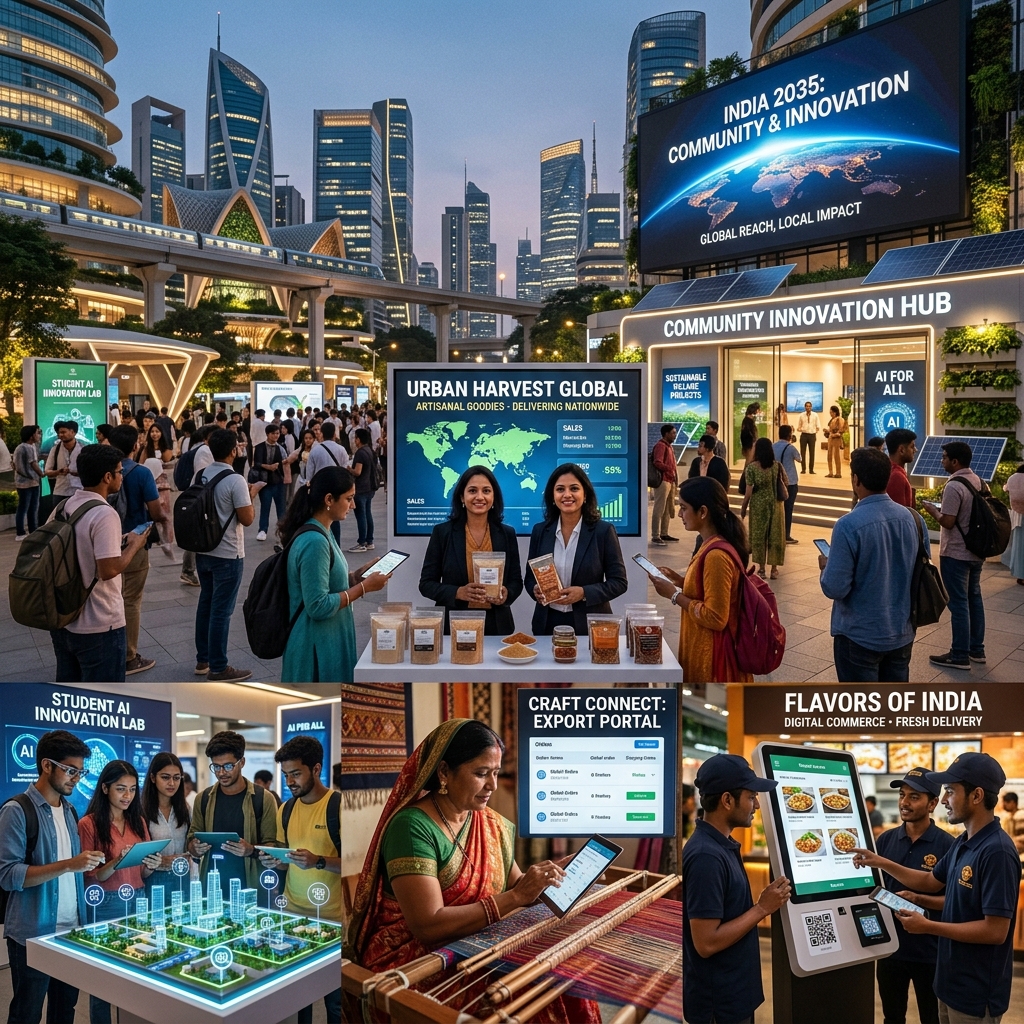
We work to ensure that by 2035 rural districts can support local entrepreneurs, standardized artisan brands, food processing collectives, and digital enterprises.
The Digitally Unified Cooperative
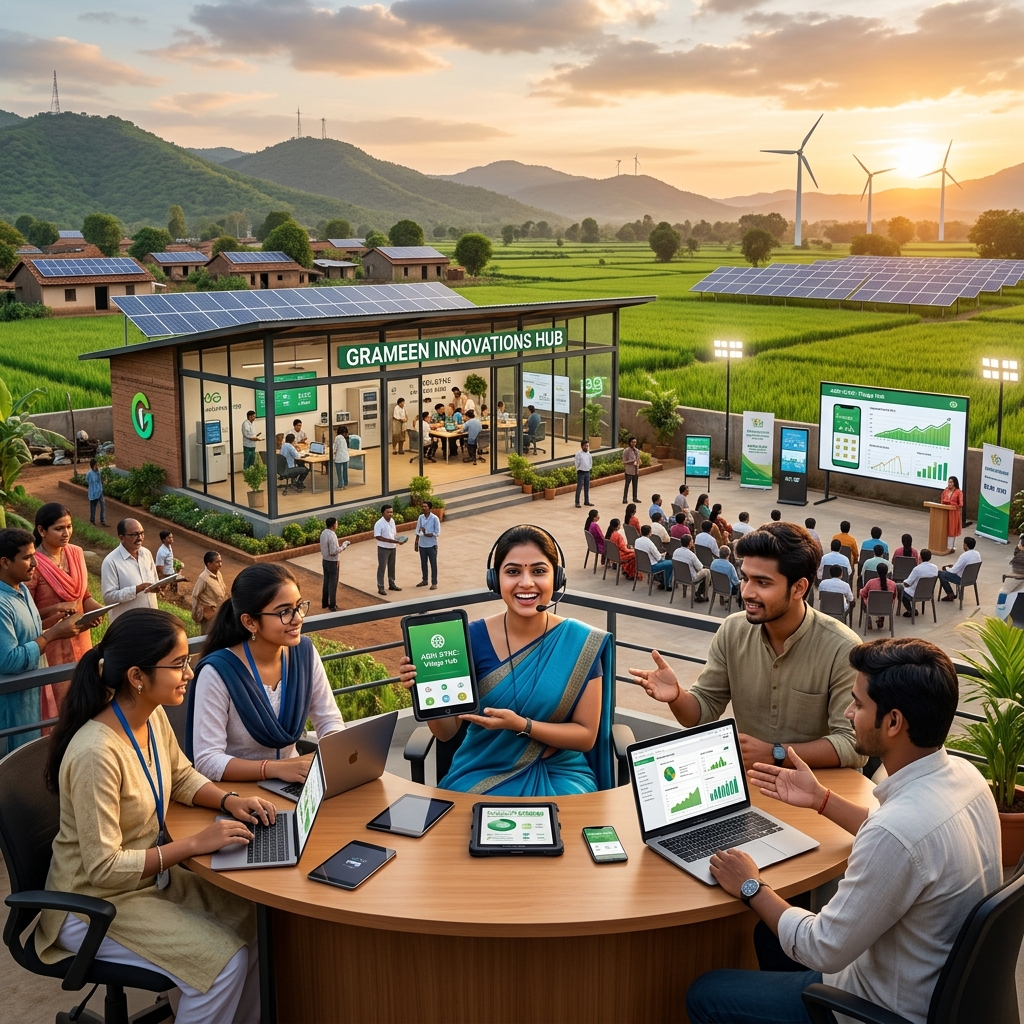
An integrated development model containing solar-powered processing labs, craft design hubs, and e-commerce packaging centers.
“The next unicorn founders of India may not emerge from technology parks. They may emerge from villages.”
Real economic progress occurs when skilling, capital, and direct market access operate together to support women-led micro-enterprises.
Models & Lessons from India's Leading Cooperatives
We study and adapt successful implementation strategies from India's leading cooperatives and foundations to design scalable enterprise programs.
Lijjat Papad
Lijjat proved that cooperative, decentralized food production can achieve national quality consistency. Their model highlights that providing women with standard product metrics and shared ownership builds strong micro-enterprise systems.
Adaptable model for large-scale district implementations.
Rural Women Livelihoods Q&A
Answering common questions about market-linked skilling, cooperative development, and rural micro-enterprises.
Ready To Build The Next Million Women Entrepreneurs?
Partner with our program architects, technical facilitators, and marketing managers to implement outcome-linked livelihoods programs.