
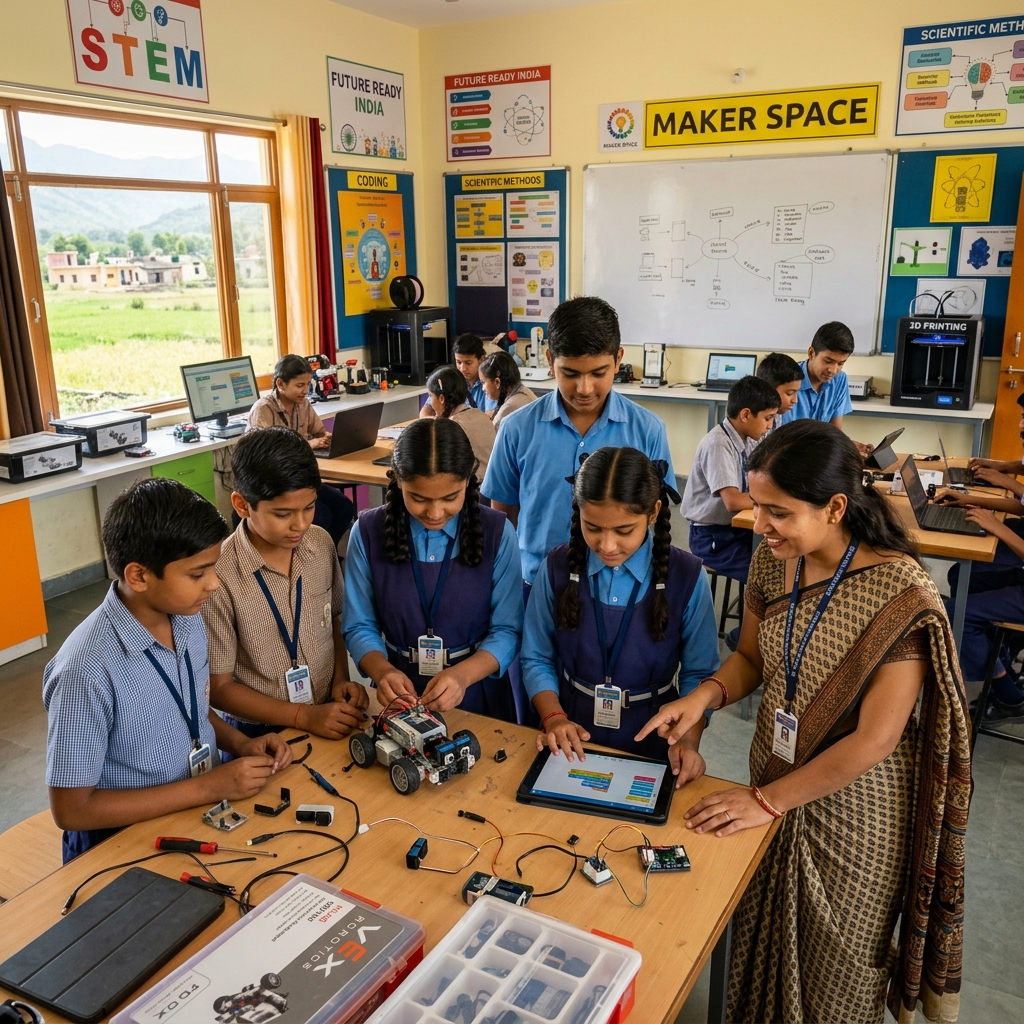
Why Government Schools Need Experiential Learning in India
Building FutureReady Schools™ for the Next Generation
India's demographic dividend will only become a national advantage if we transform how our children learn today. Rote recall must give way to critical logic and hands-on building.
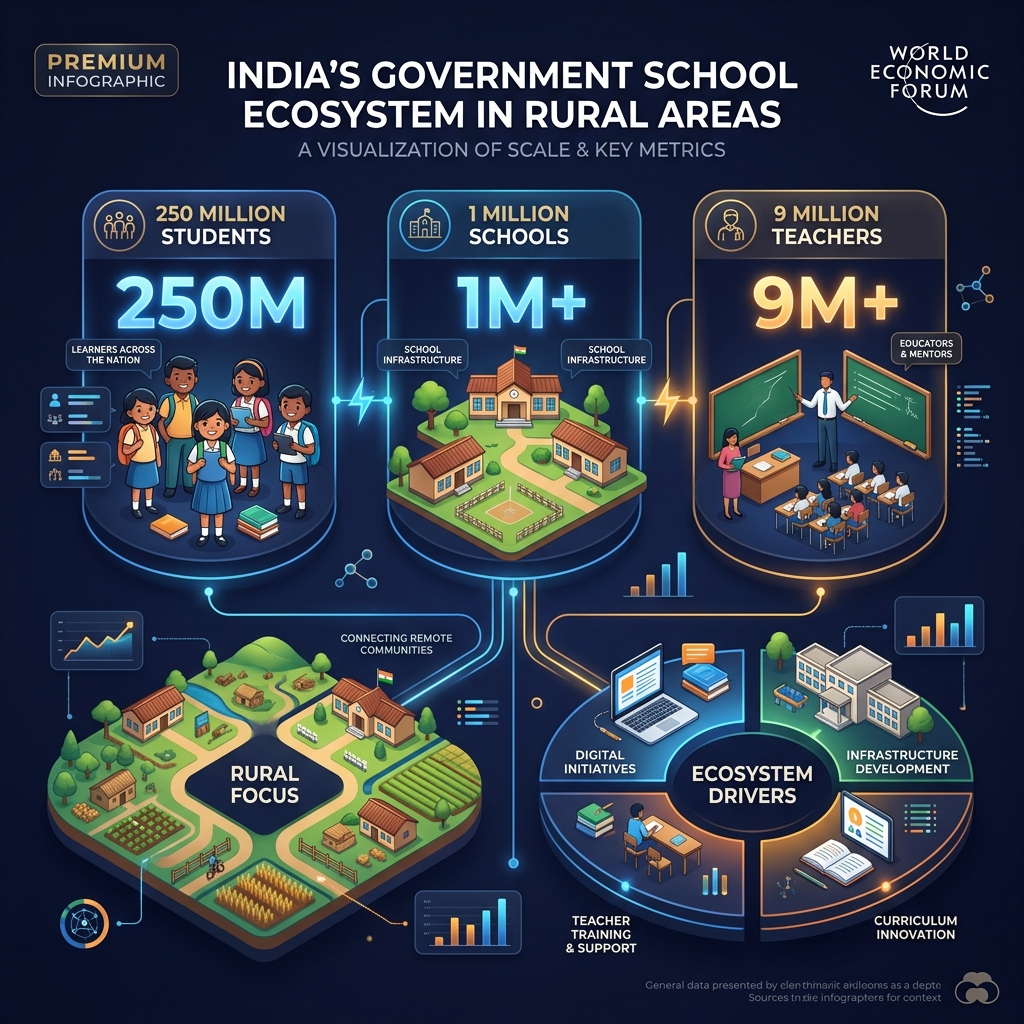
The Massive Scale of India's Educational Landscape
India manages the largest public school network in the world. Any attempt at curriculum transformation or pedagogical upgrade must address this massive, distributed network. Rather than designing isolated solutions for single classrooms, our frameworks are built to scale across entire districts, working alongside existing administrative pipelines.
The largest public student body in the world, representing India's potential demographic dividend.
A massive, distributed network reaching into the most remote tribal blocks and rural villages.
The frontline drivers of literacy who require structured, continuous pedagogical co-piloting.
Students studying in rural and semi-urban classrooms where access to technology is historically limited.
Moving Beyond Rote Memorization
Traditional education in India has long been built on memorizing textbook facts for written exams. While this system produced high scores in rote recall, it often left students unprepared to apply logical concepts to practical challenges. The emerging economy requires analytical reasoning, collaborative problem solving, and technological skills.
Traditional Education Paradigm
Rote Recall
Instruction centered around passing standardized examinations by reproducing textbook snippets without understanding context.
Passive Lectures
Students act as silent consumers, listening to lectures without hands-on application or dialogue.
Isolated Subjects
Science, Mathematics, and Languages taught in strict silos, leaving students unable to apply concepts across disciplines.
Exam-Centric Goals
Lighthouse metrics focus purely on marks and grade averages, neglecting behavioral, analytical, or future skills development.
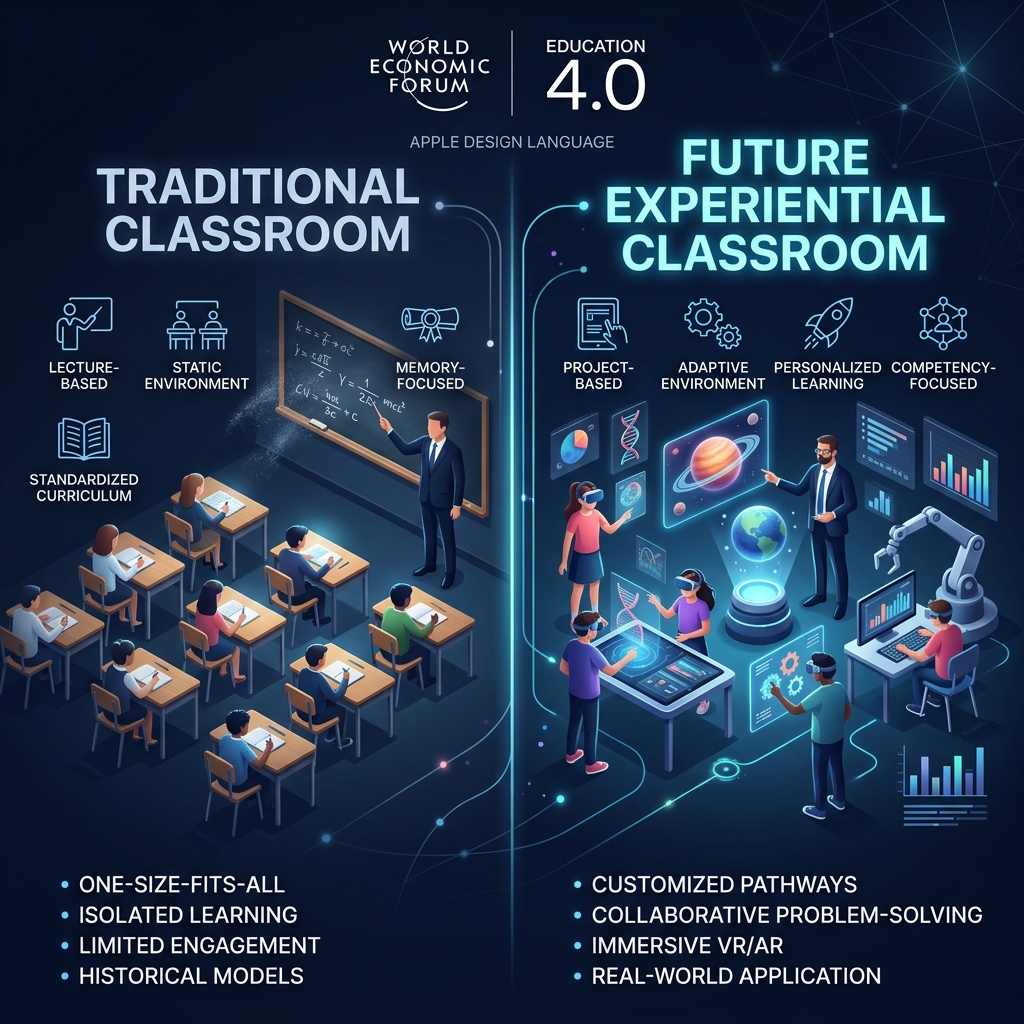
Experiential Learning Paradigm
Analytical Logic
Learning core principles through trial, error, and physical building blocks (robotics, solar cells, coding structures).
Collaborative Building
Students work in peer-led teams, co-creating solutions for local community issues (agricultural sensors, smart waste devices).
Convergent Pedagogy
STEM concepts mapped directly onto real-world problems. Math formulas become code parameters; science becomes functional tools.
Portfolio Outcomes
Success measured by what a student can create, explain, and scale, alongside standard school exam metrics.
NEP 2020: Supporting Rote-Free Educational Reform
The National Education Policy (NEP 2020) provides a mandate to reform school education in India. By calling for competency-based learning, cross-disciplinary science and math modules, and coding training, the policy shifts focus toward experiential teaching methods.
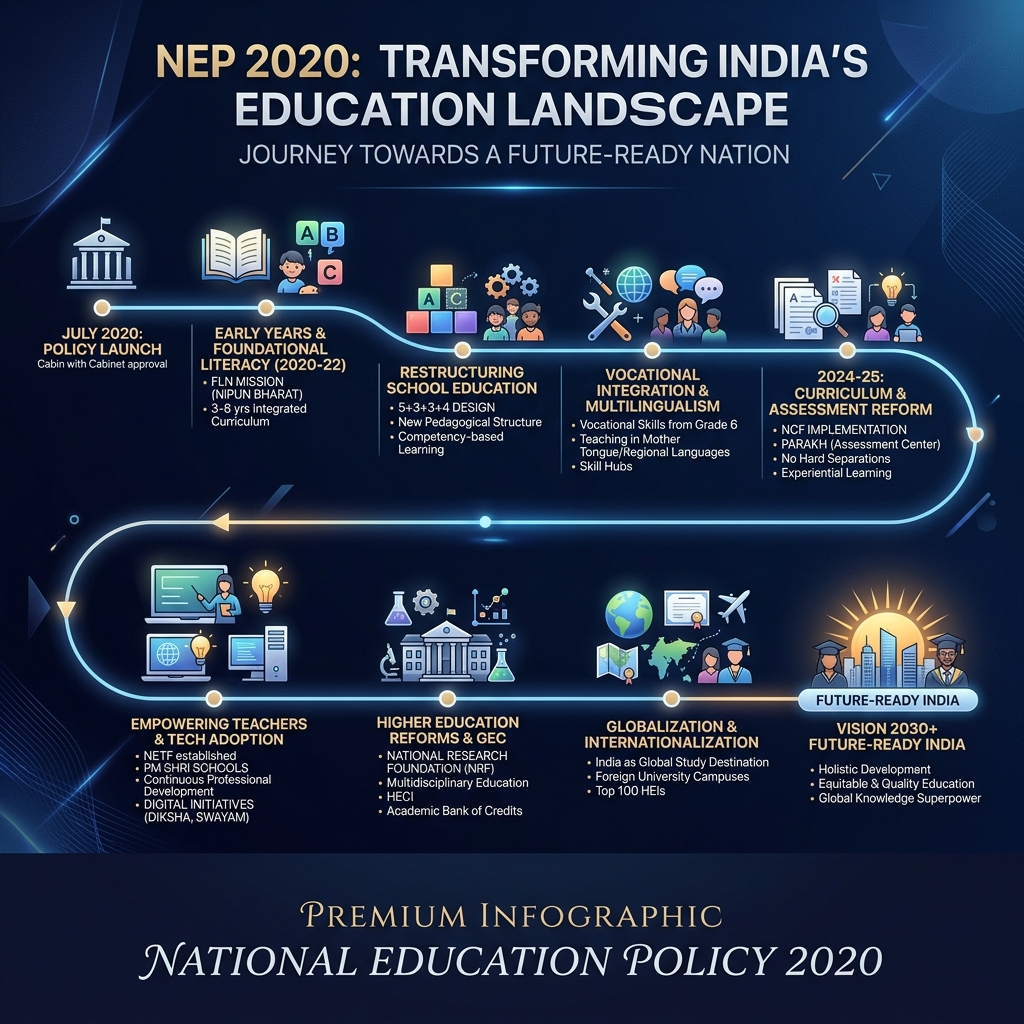
Shift to Competency-Based Education
NEP 2020 establishes a mandate to transition away from rote learning, declaring that school curricula must center on conceptual clarity, critical thinking, and logical reasoning.
Experiential Pedagogy Adoption
National frameworks incorporate art, sports, storytelling, and hands-on laboratory work as core tools within the daily schedule of government primary and middle schools.
Grassroots Digital Literacy
Deploying modular, offline-friendly software suites, coding platforms, and digital toolkits directly into rural and tribal schools to ensure technical equity.
Future Skills & Tech Vocations
Establishing smart laboratories, 3D printing pods, and coding programs that prepare high schoolers for careers in the AI, drone, and green energy economies.
Grassroots Entrepreneurship
Merging school transformation projects with One District One Product (ODOP) hubs and local artisan circles, preparing classrooms to serve as community innovation centers.
How Experiential Pedagogy Works in Practice
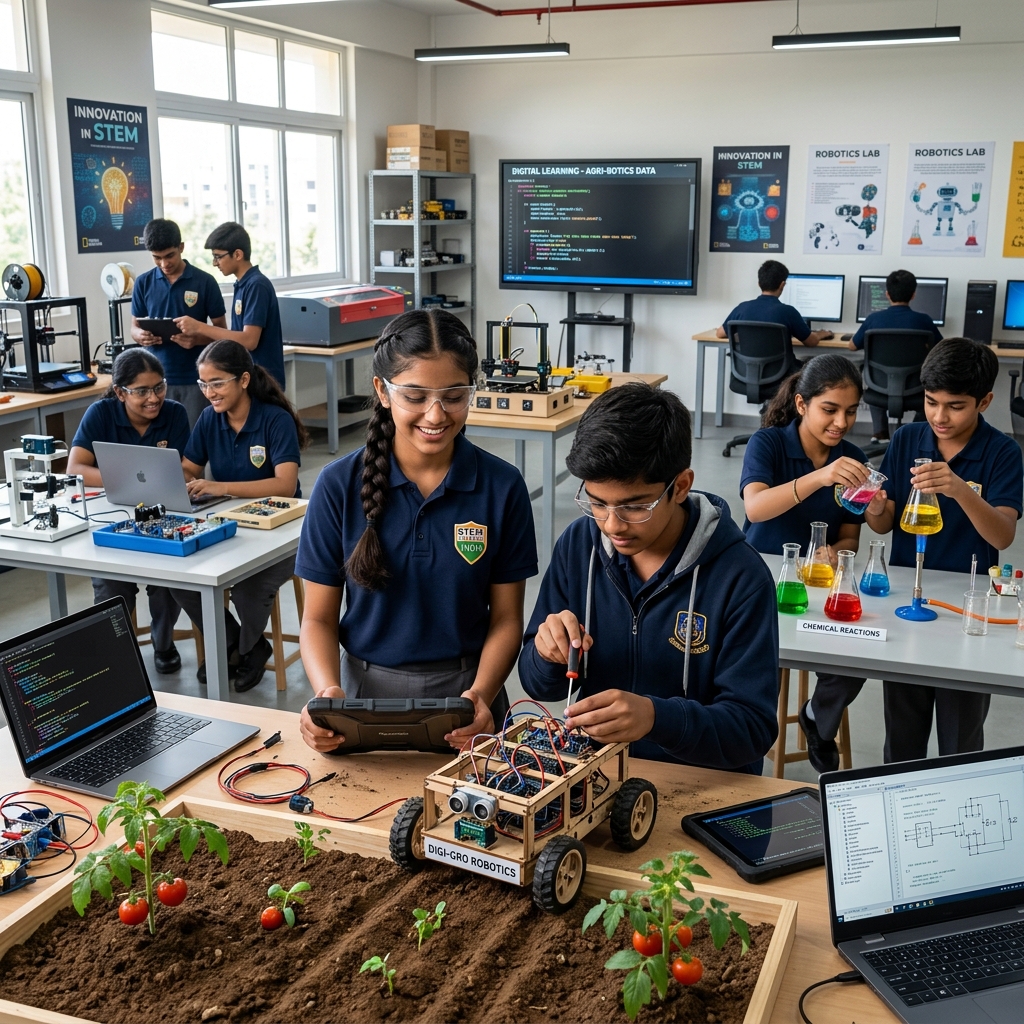
Experiential learning translates theoretical textbook definitions into physical, logical experiences. Rather than listening to static lectures, students build, test, and troubleshoot systems, which deepens logical retention.
Experiential Science
In rural blocks, science has historically been limited to diagrams drawn on blackboards. Under our model, abstract concepts like electromagnetic induction or acid-base chemical reactions are taught through tangible lab kits. Students assemble their own electromagnets using copper wires and iron nails, observing forces in real-time. This interactive approach changes science from a subject to be memorized into a physical world to be investigated.
88% increase in concept retention measured over a 12-month period across pilot districts.
What Global Educational Leaders Have Proved
Educational transformation has already succeeded globally. By examining international models, we can adapt key lessons to fit the scale and vernacular requirements of public school systems in India.
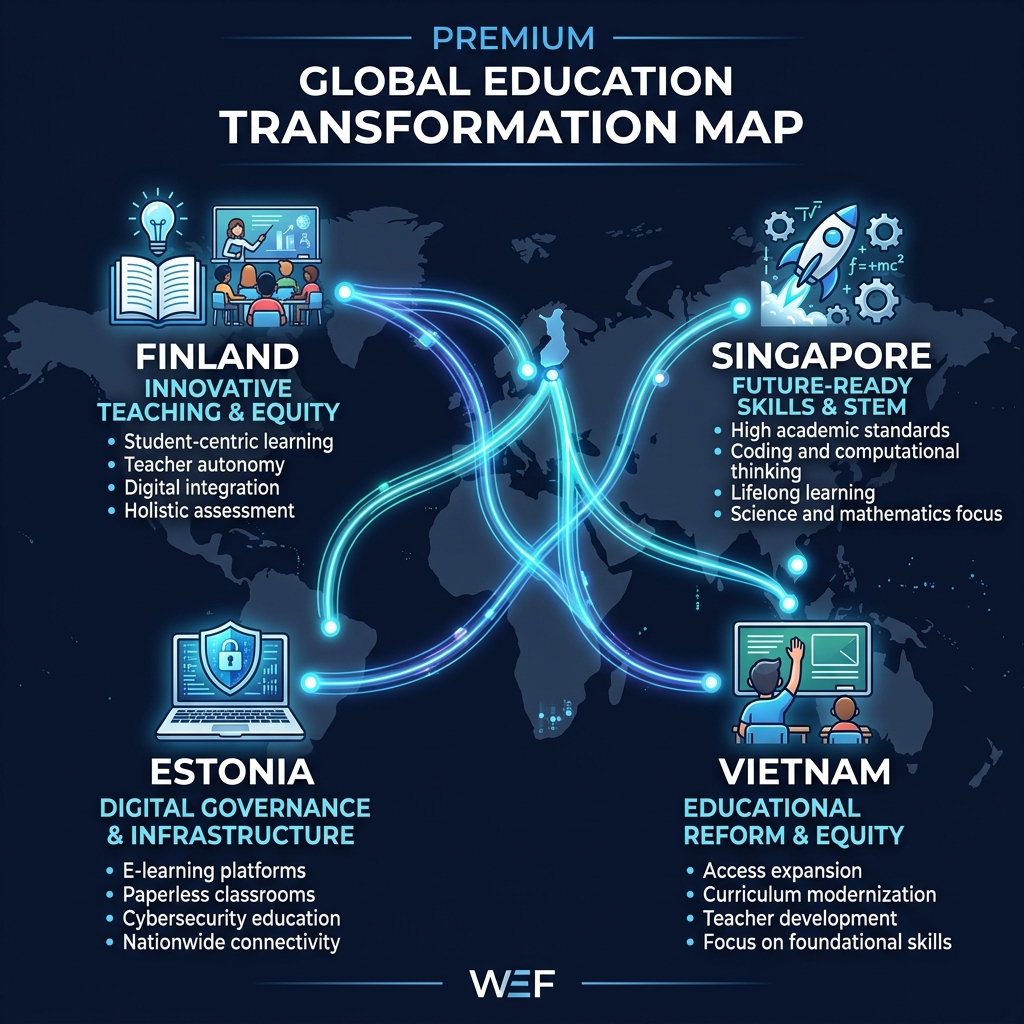
Finland replaced traditional subject silos with phenomenon-based learning, where students study real-world topics (like climate change or community trade) by combining history, math, languages, and science. This model shows that when learning is interdisciplinary and student-centered, deep understanding and logical reasoning develop naturally.
Introducing FutureReady Schools™
Our centerpiece model combines five developmental pillars to transform public schools into active community learning centers.
Experiential Pedagogy
Replacing blackboard instruction with project-based modules, hands-on kits, and collaborative problem-solving exercises mapped directly to the school board curriculum.
Future Skills Integration
Teaching coding logic, data analysis, GIS mapping, and prompt diagnostics to prepare rural students for opportunities in the emerging digital economy.
STEM & Robotics Innovation
Setting up modular maker-spaces equipped with electronic sensors, gear motors, and local toolkits to allow students to build working hardware prototypes.
Entrepreneurial Vocations
Connecting school projects to regional specialties, local agriculture, and cooperative business models to foster practical problem-solving and vocational skills.
Community Hubs
Opening schools as community centers where parents, women-led SHGs, and local artisans access digital tools and learn modern design palettes.
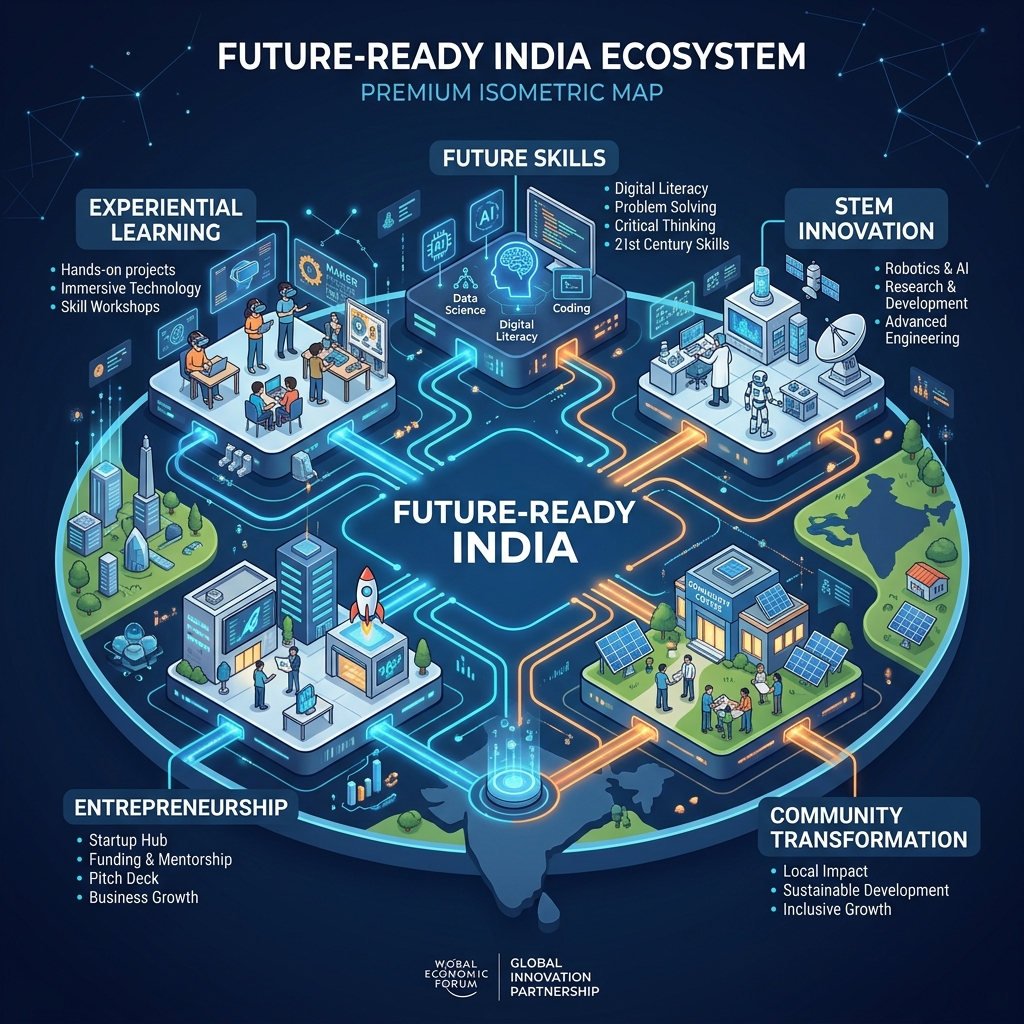
Visualizing the connections between schools, coding platforms, regional specialties, and women entrepreneurs.
State Focus Areas: Livelihoods & Education
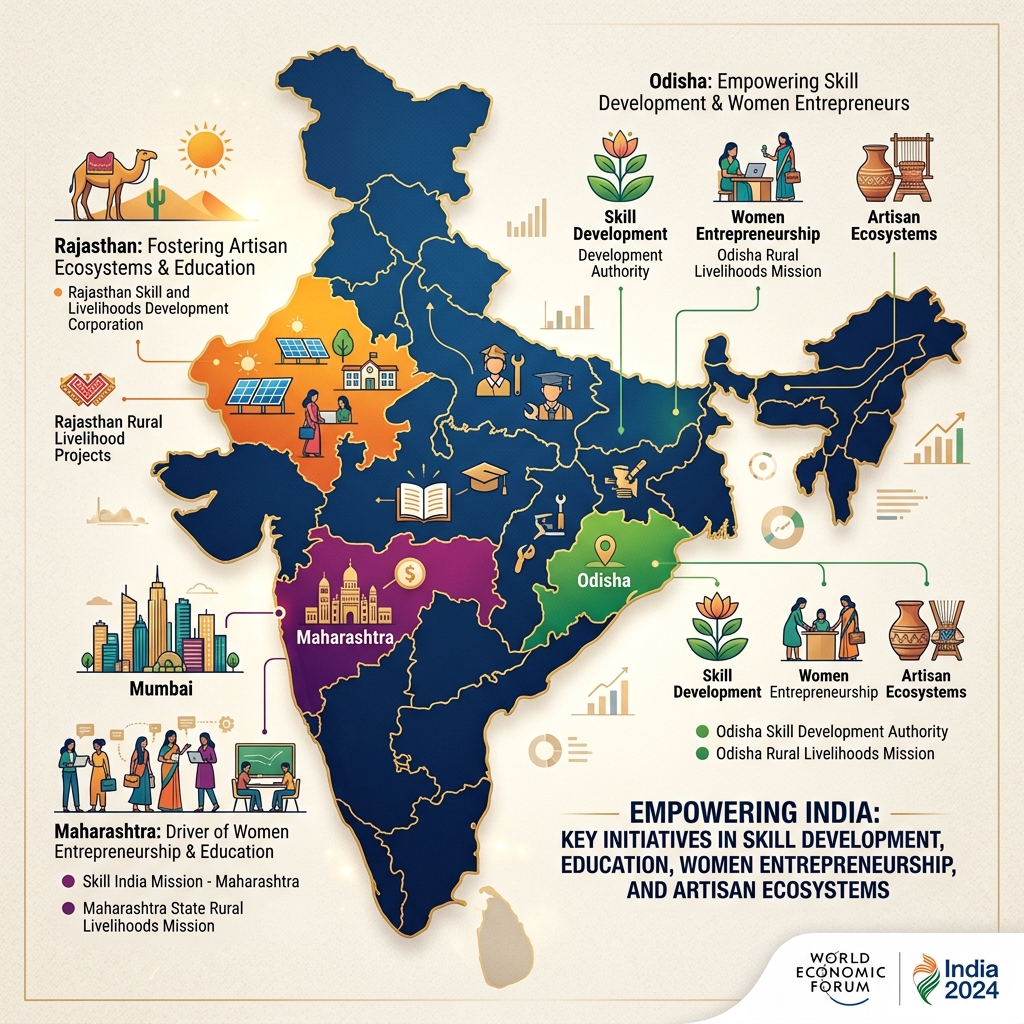
We focus our work in Odisha, Rajasthan, and Maharashtra, tailoring our educational and enterprise development programs to fit regional requirements.
Odisha
500+ Schools Transformed | Vernacular Odia Integration
Our work in Odisha demonstrates how modular STEM programs can be scaled across public school systems. By translating complex technical logic into Odia and coordinating training with local block officials, we transitioned classrooms into active, hands-on learning labs that match NEP 2020 guidelines.
Rajasthan
3,000+ Weavers Supported | Color Palette Upgrades
In Rajasthan, we connect school transformation with the local artisan economy. We introduce modern color stories and ergonomic loom upgrades to weaver cooperatives while providing local classrooms with digital design tools, keeping cultural heritage alive through technology.
Maharashtra
480+ Self-Help Groups (SHGs) Transitioned | FSSAI Compliance
Our Maharashtra initiative helps rural women transition traditional Self-Help Groups into formal business collectives. By digitizing bookkeeping and setting up shared, solar-powered processing units, we help cooperatives produce standardized goods for national retailers.
Directing CSR Funding to Systemic Upgrades
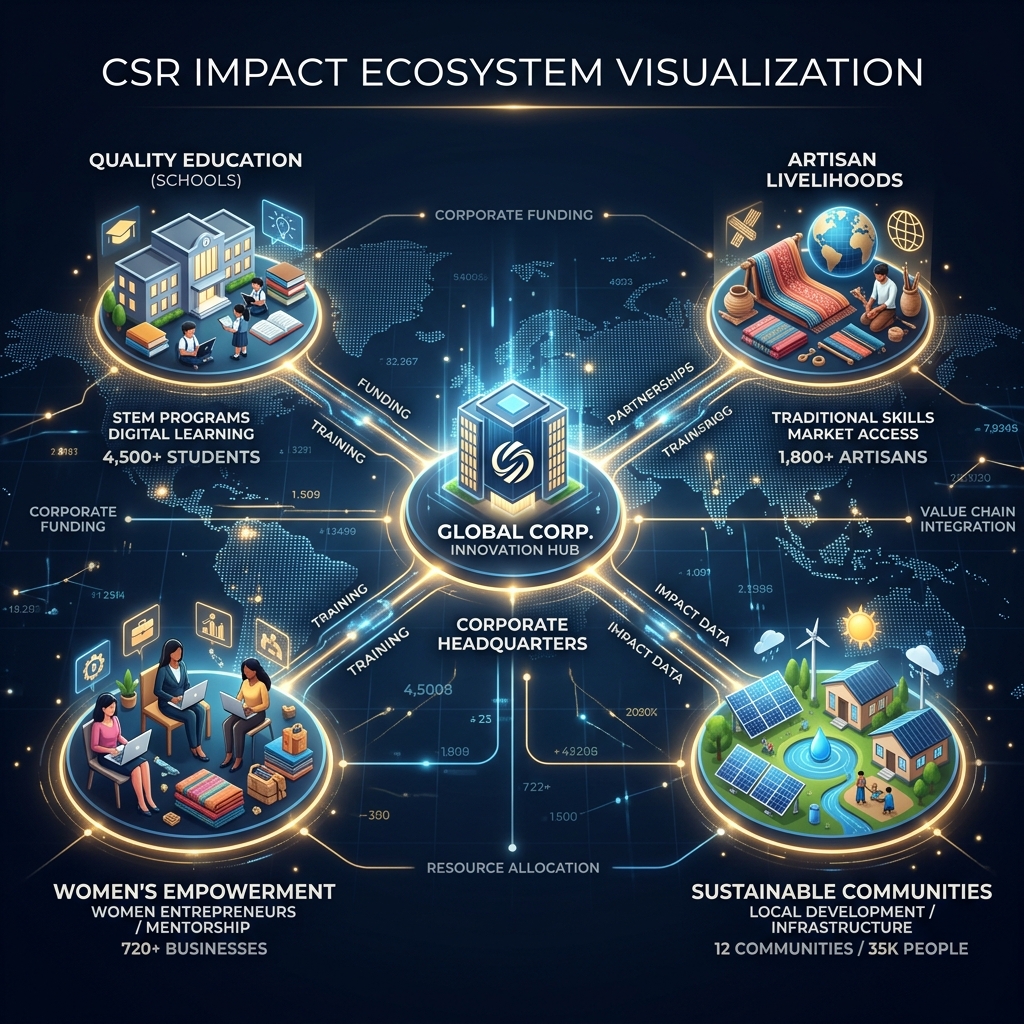
Corporate social responsibility (CSR) budgets can drive long-term impact when aligned with local developmental goals. We provide corporate sponsors with transparent GIS-mapped dashboards to monitor every step of their investment.
Modular STEM Labs
Setting up low-cost science and maker spaces that run offline, ensuring high utilization rates in rural schools.
Digital Literacy Tools
Deploying solar-powered tablets and block-coding systems, bridging the digital divide in tribal-dominant areas.
Teacher Training Academies
Moving away from short seminars to provide teachers with 12 months of hands-on, in-classroom support.
Grassroots Maker Spaces
Creating creative labs where students and local communities build prototype answers to neighborhood problems.
Vocational Internships
Connecting high school students to local craft and farming cooperatives to build real-world business skills.
Audit-Grade GIS Telemetry
Providing sponsors with a live reporting dashboard to trace every rupee of CSR funding directly to progress metrics.
Our Vision for Public Classrooms
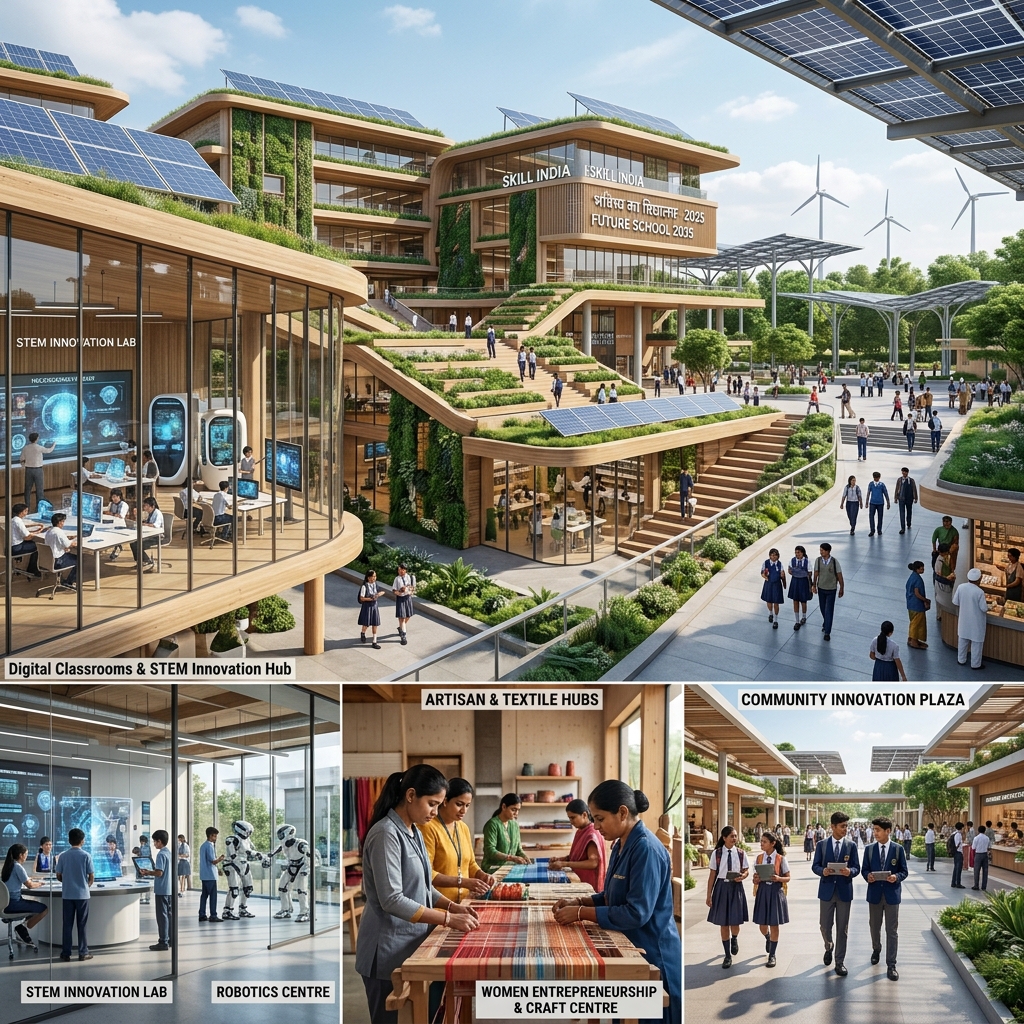
We believe public schools can serve as active community hubs for education, tech innovation, and economic development.
The Community Innovation Campus
An integrated campus containing digital classrooms, STEM labs, solar-powered processing hubs, and community meeting spaces.
Learning Hubs
Equipped with interactive science kits and multi-language learning materials, making education accessible to all.
Innovation Hubs
Setting up maker spaces where students and local communities build prototype answers to neighborhood problems.
Entrepreneurship Hubs
Supporting local craft and agricultural collectives with digital design tools and modern marketing support.
Skill Hubs
Offering certification programs in digital platforms, data tagging, and technical maintenance.
Community Hubs
Providing solar-powered spaces where parents, women's groups, and cooperative managers meet.
“The future of India will be built in its classrooms.”
Real developmental progress begins with how we teach our children. By replacing rote recall with logical reasoning and physical assembly, we empower the next generation to become problem solvers.
Reform & Implementation Q&A
Answering common questions from governments, corporate CSR teams, and educational practitioners.
Ready to Build FutureReady Schools™?
Partner with our program coordinators, teacher trainers, and local cooperative organizers to implement outcome-linked reforms.