

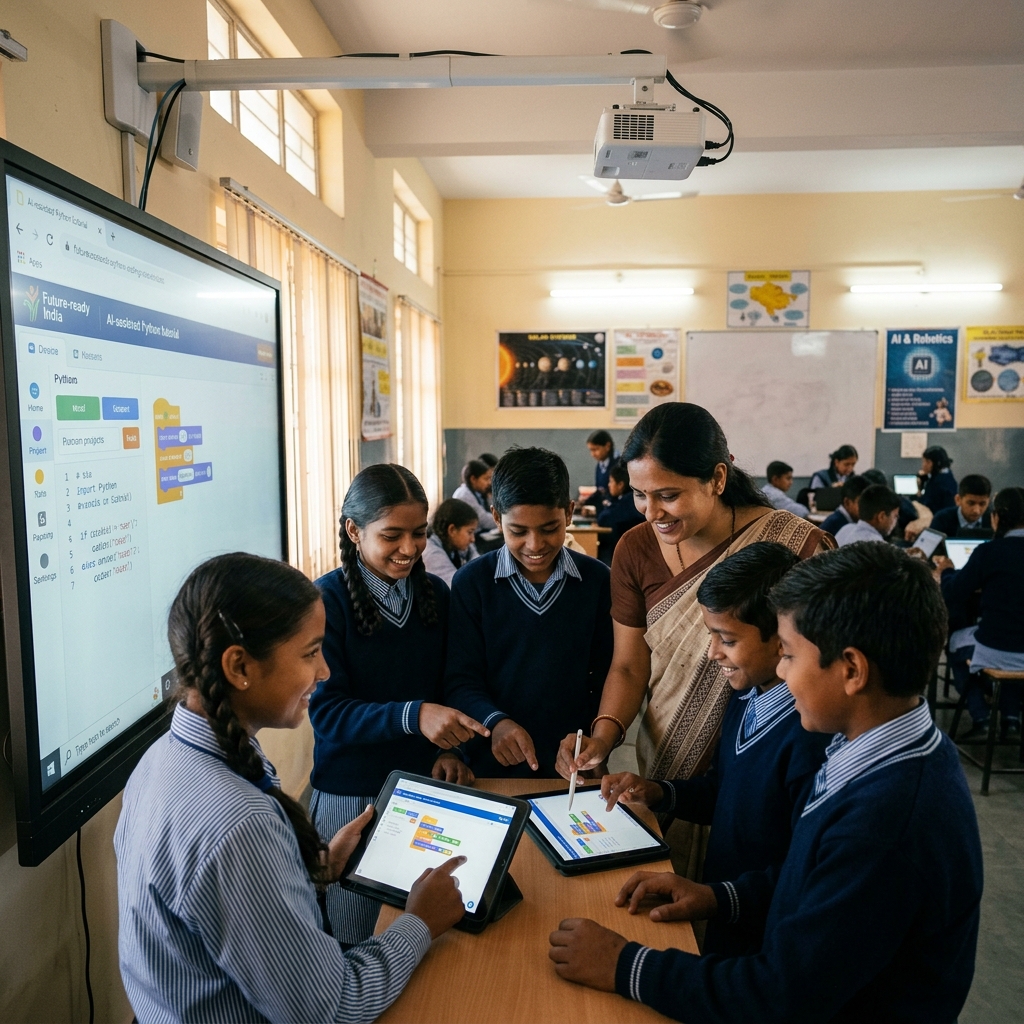
Digital Literacy Is The New Basic Literacy
Preparing Rural India For The Age Of Artificial Intelligence
The ability to read and write transformed the industrial age. Digital literacy and AI awareness will determine who participates and succeeds in the emerging technology economy.
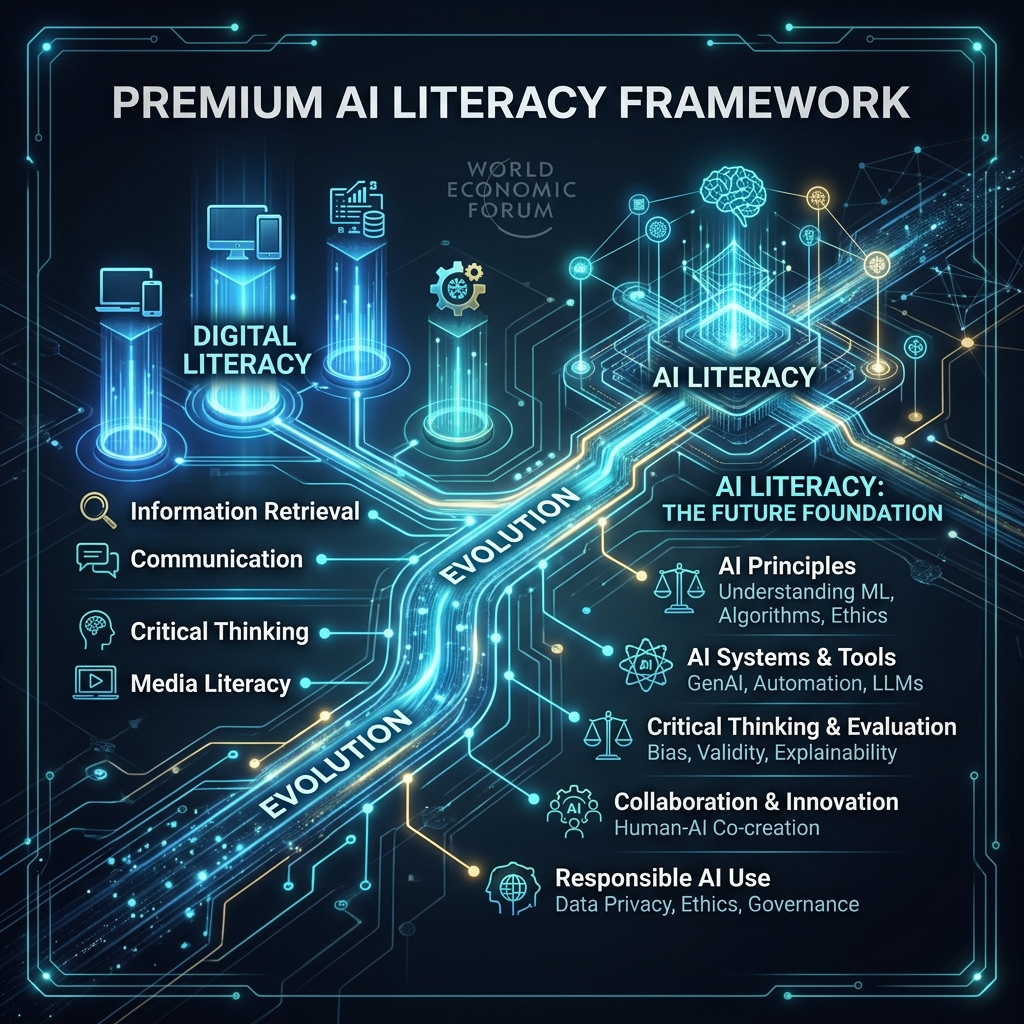
The Evolutionary Stages of Literacy
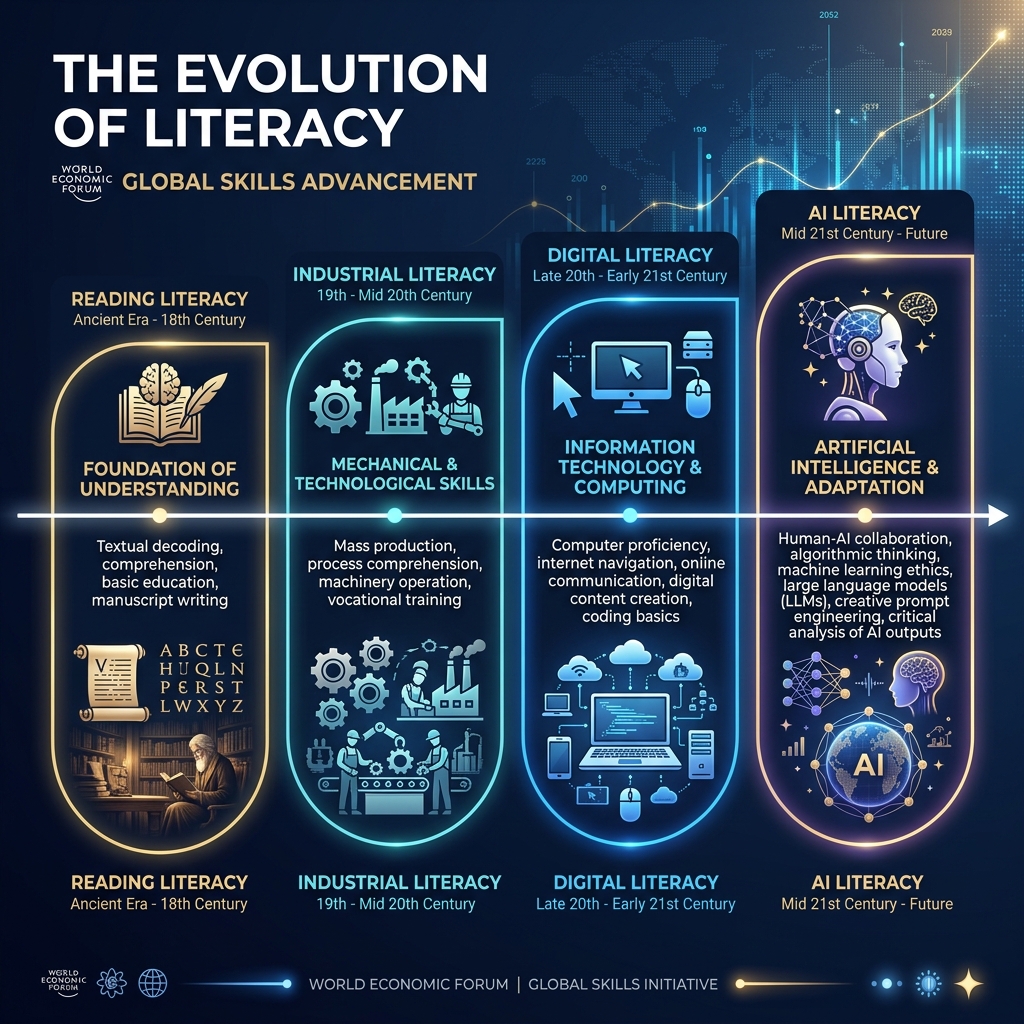
What defined functional literacy in the past is no longer sufficient to participate in the modern economy. As society moves from basic reading comprehension and bookkeeping to digital public systems, the baseline skills required for employment have shifted.
Reading & Writing Literacy
The Foundation of the Industrial Age
In the 19th and 20th centuries, basic literacy—the ability to read and write—served as the foundation for the industrial economy. It allowed workers to follow written safety instructions, operate machinery, and participate in organized manufacturing systems, moving society from agrarian labor to structured assembly lines.
Financial Literacy
Navigating Credit & Commercial Markets
As economies modernized, understanding cash flow, bank accounts, interest rates, and loan structures became essential. Financial literacy protected rural families from predatory lending networks and allowed farming households to access formal credit to invest in equipment and scale their production.
Digital Literacy
Interacting with Digital Public Systems
With the rise of personal computing and smartphones, digital literacy emerged as a necessity. It involves the ability to use mobile interfaces, navigate the internet, and access digital public platforms—such as managing online bank accounts, applying for government benefits, and checking crop prices.
AI Literacy
Empowerment in the Automation Economy
In the emerging AI age, simply using interfaces is no longer enough. AI literacy requires students to understand how algorithmic systems make decisions, how to use prompting to search and create, and how to verify information. This capability ensures that rural youth can participate in the digital service economy.
Understanding the Digital Divide
While India's metro regions enjoy high-speed internet and multiple home computers, rural and tribal blocks face different realities. Widespread smartphone access is common, but access to computer labs and structured digital training remains limited.
Reliable, high-bandwidth connection available in metro districts.
Limited or unstable data access in remote blocks.
Multiple active laptops, tablets, or computers per household.
Most households rely on a single, shared smartphone.
Familiarity with digital search, payments, and online tools.
High anxiety levels when navigating unfamiliar digital interfaces.
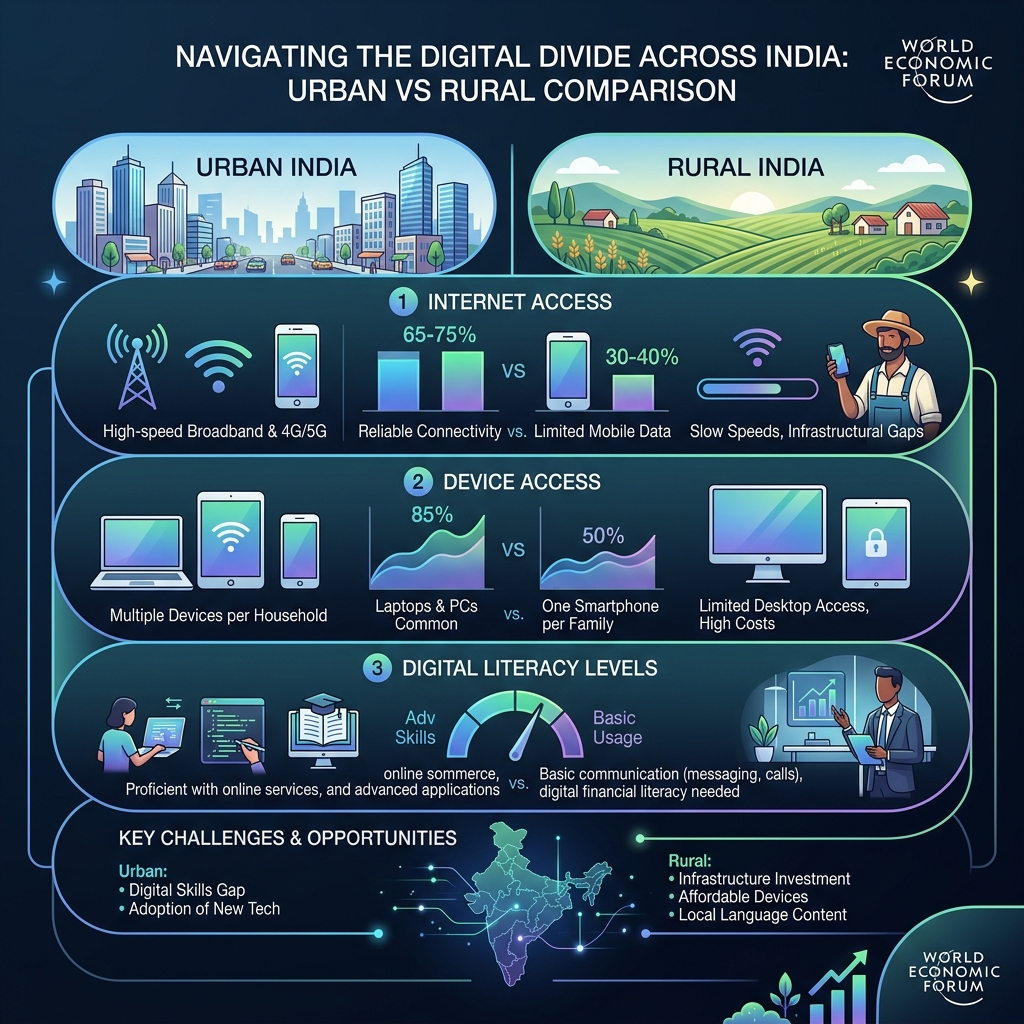
Visualizing access metrics across urban centers and rural development blocks.
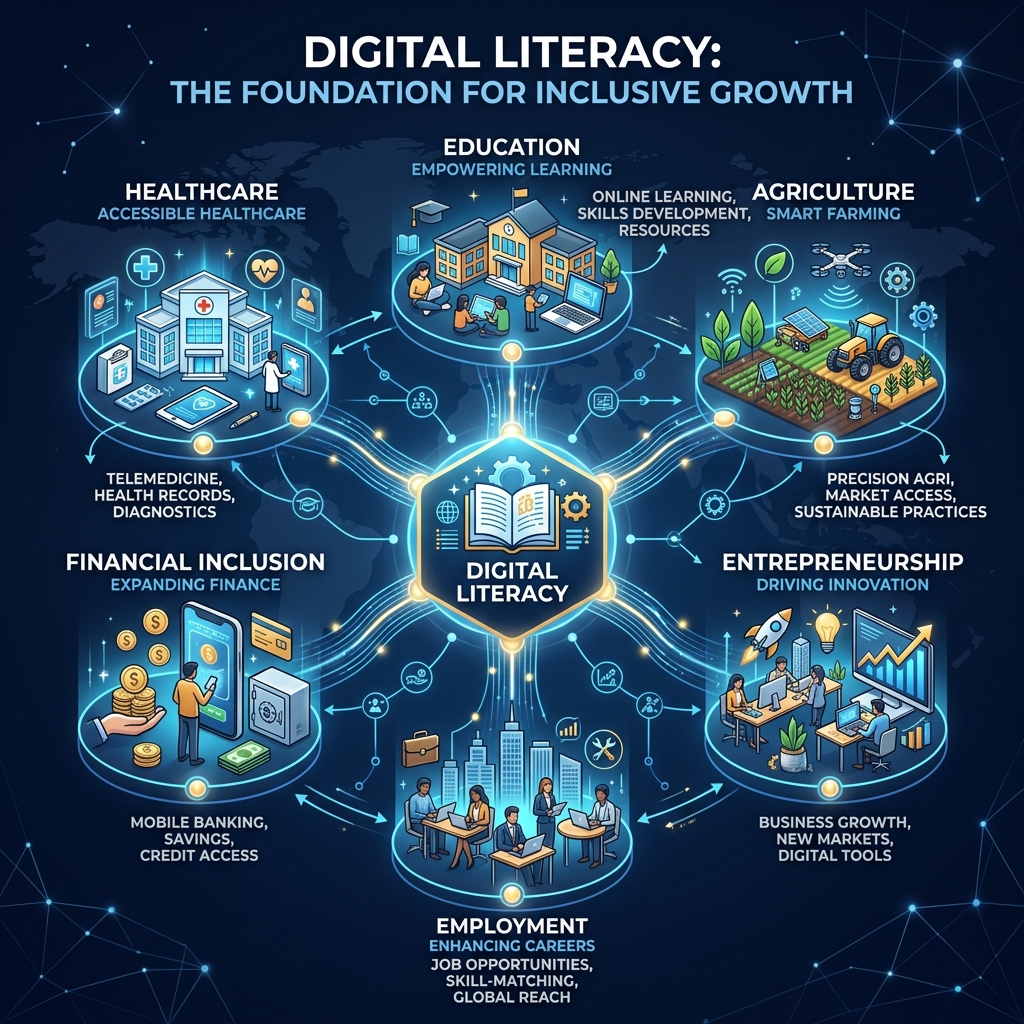
Connecting Digital Access to Livelihoods
Digital literacy directly supports economic development. From managing micro-enterprise bookkeeping to accessing digital markets and telemedicine, tech capabilities help communities build resilience.
The AI Economy & Remote Gigs
The rise of artificial intelligence creates a massive demand for data collection, system testing, and digital verification. Rural youth who master basic digital literacy and prompt diagnostics can access remote digital contract work directly from their home districts, providing a new source of income.
Digital Payments & Financial Inclusion
With India's UPI system managing billions of monthly transactions, understanding digital transactions is essential. Digital literacy ensures rural merchants can accept digital payments, protect themselves against online scams, and build a transaction history that unlocks formal bank loans.
Precision Agriculture & Crop Planning
Modern farming utilizes satellite data, soil sensors, and digital weather forecasting to optimize crop growth. Farmers who can navigate digital dashboards can monitor soil moisture, forecast pest patterns, and sell their harvests on B2B e-commerce platforms to secure fair prices.
Digital Healthcare & Telemedicine
Telehealth platforms connect remote village clinics to specialized doctors in major metropolitan hospitals. Digital literacy allows local health workers and families to book video consultations, manage electronic health records, and access online prescription services.
Our AI Literacy Framework
We believe digital education should prepare students to work with artificial intelligence. Our framework covers seven key capabilities to build digital confidence.
Digital Confidence
Building familiarity with operating systems, file directories, hardware inputs, and application layouts so that using new digital tools feels natural.
Global Models for Digital Education
Estonia, South Korea, Finland, Singapore, and the UAE have built national programs to integrate digital skills across public schools.
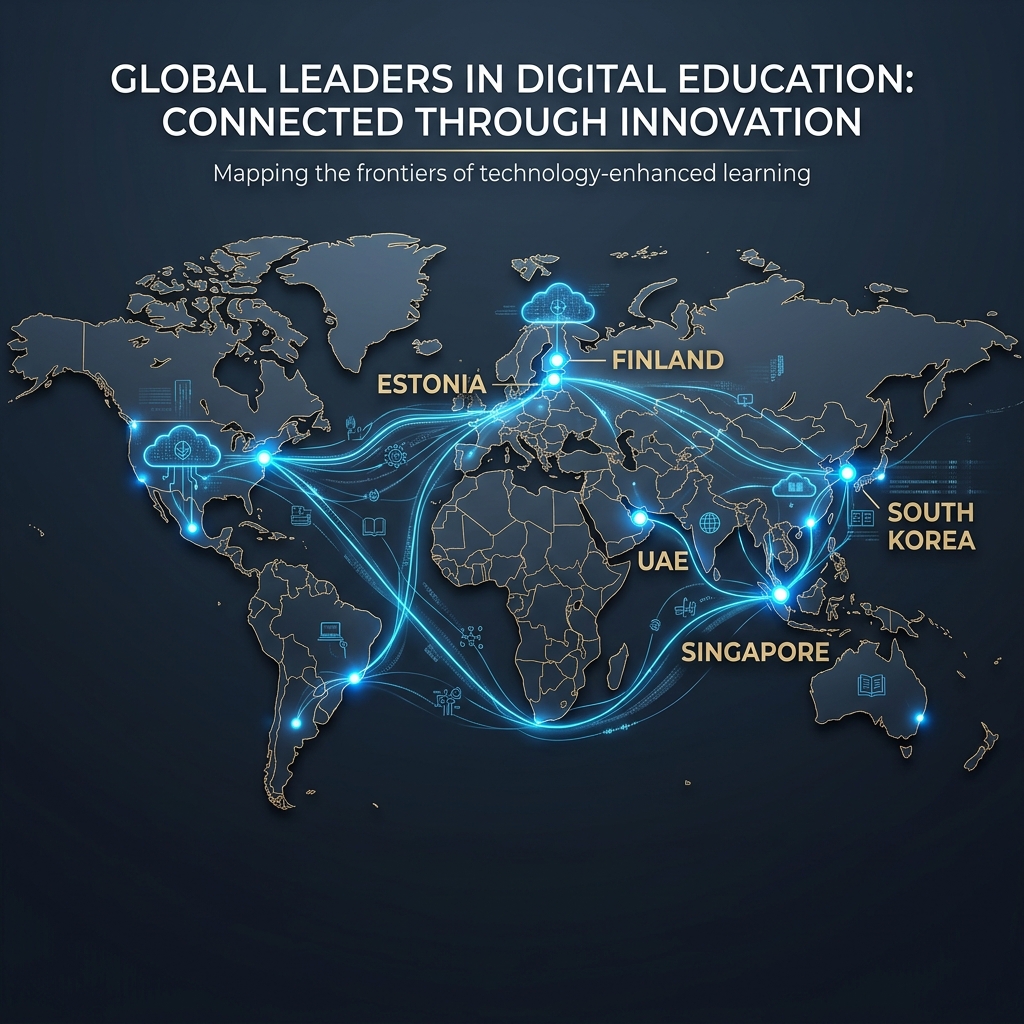
Singapore's national AI strategy integrates coding and digital literacy across all school levels. Through public funding, every student receives access to digital devices and smart classroom systems, creating a tech-ready workforce that drives Singapore's digital economy.
Introducing FutureReady Digital Communities™
Our developmental framework coordinates digital learning and community enterprises to support digital inclusion in rural areas.
Digital Literacy Labs
Setting up school labs with offline-friendly coding suites, tactile logic blocks, and digital devices to build fundamental computing confidence.
AI Literacy Curricula
Teaching students to use prompting, understand data structures, and work with algorithmic systems to solve real-world problems.
Future Skills Training
Offering vocational tracks in GIS mapping, drone maintenance, and database management, preparing youth for technical employment.
Rural Micro-Enterprises
Helping local entrepreneur groups register cooperatives, digitize their transaction histories, and manage supply networks online.
Community Innovation Hubs
Opening school maker-spaces to the wider community, allowing local artisans and farmers to access design tools and digital markets.
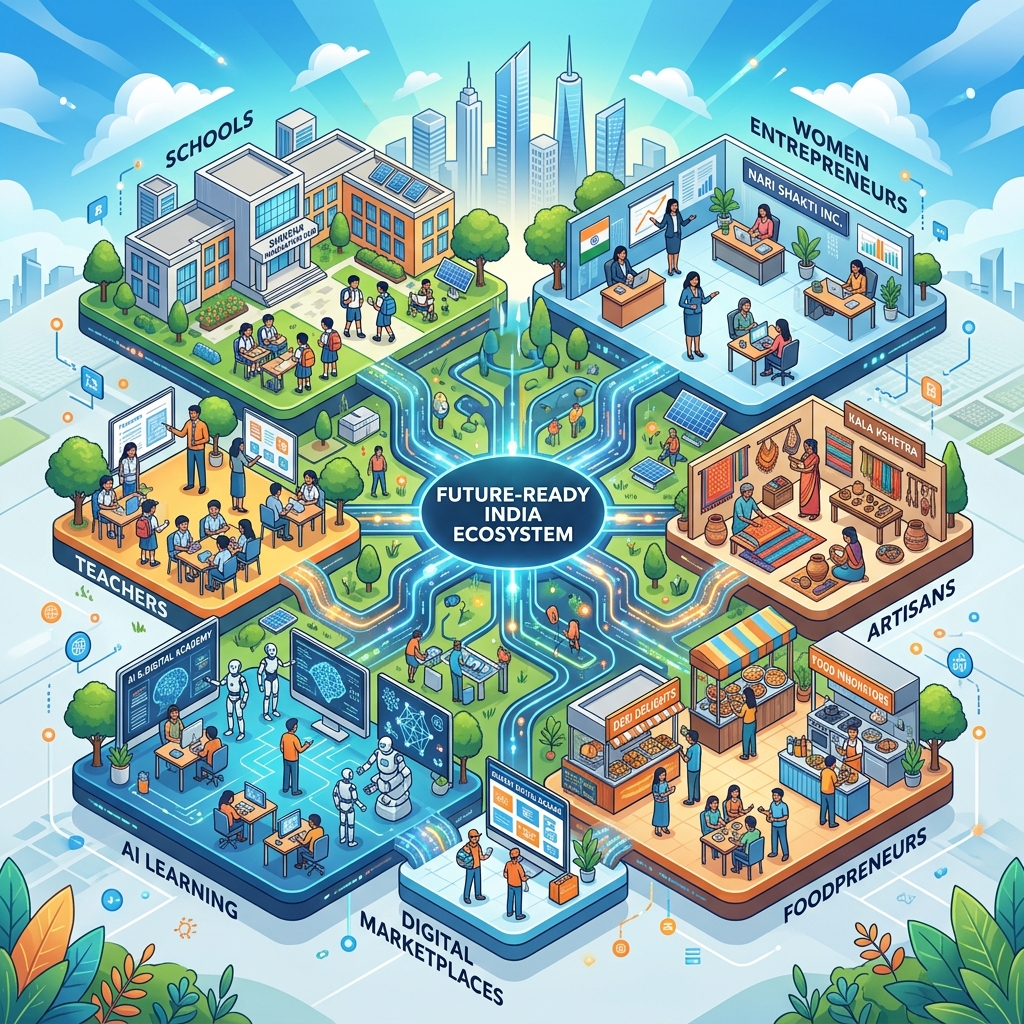
Visualizing the connections between digital school labs, rural micro-enterprises, and digital commerce pipelines.
Why Rural Communities Can Leapfrog Traditional Technology
Rural India can bypass traditional desktop computers by adopting mobile-first solutions. With widespread smartphone access and digital public systems, communities can adopt mobile learning and commerce tools directly.

Universal Smartphone Penetration
Over 75% of rural households in India now have access to a smartphone. This widespread mobile access provides a direct pipeline for delivering educational apps, digital tools, and remote skilling resources to communities.
UPI & Digital Public Infrastructure (DPI)
India's UPI system has simplified payments, allowing even small rural merchants to receive digital payments instantly. This DPI forms the foundation for digital commerce and micro-enterprise development in rural areas.
India's Youth Demographics
With over 50% of the population under 25, India has a massive young workforce. Providing these youth with digital and AI literacy prepares them to lead technical projects, agrarian cooperatives, and local businesses.
Solar-Powered Infrastructure
Combining modular learning tools with solar-powered charging setups allows schools in off-grid blocks to run computer labs consistently, bypassing local electricity challenges.
Enabling Public School Upgrades
We collaborate with state education departments and corporate sponsors to set up digital labs, deploy preloaded tablet devices, and support teacher training across public school networks.
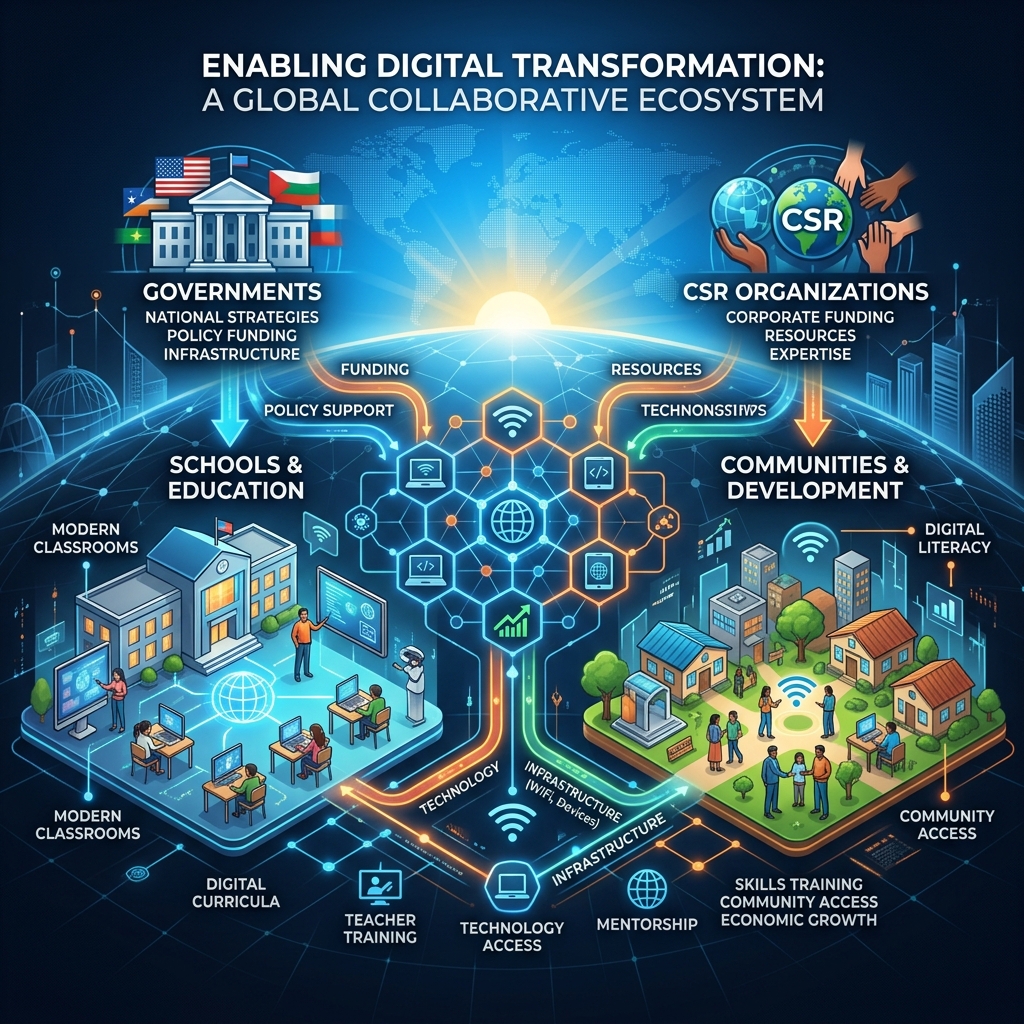
- Integrating digital skills training into the school board syllabus.
- Developing educational infrastructure at the school block level.
- Supporting teacher certifications in technical and logic subjects.
- Funding preloaded tablet devices and solar power setups for off-grid schools.
- Supporting modular coding and maker-space lab construction.
- Providing annual funding for local program facilitators.
Our Vision for Digital Empowerment
We work to ensure that by 2035 every student in rural schools has access to digital tools, basic programming logic, and AI awareness.

The Digitally Unified Village
A community structure where students use educational platforms, and local artisan and women-led cooperatives coordinate supply chains online.
“Digital literacy is no longer a skill. It is the foundation of participation in the modern world.”
Access to technology is a key driver of economic equity. By helping students build digital confidence early on, we prepare them to lead rural development projects and enterprises.
Digital Skilling Q&A
Answering common questions about digital inclusion, rural device access, and AI literacy.
Ready To Build FutureReady Digital Communities™?
Partner with our technical architects and program coordinators to implement outcome-linked digital upgrades across rural districts.