
How CSR Can Transform Education At Scale
Building India's Future Through Strategic Partnerships
The future of corporate social responsibility in India is not charity. It is creating scalable, self-sustaining ecosystems that transform communities for generations.
The ₹30,000+ Crore Opportunity for Impact
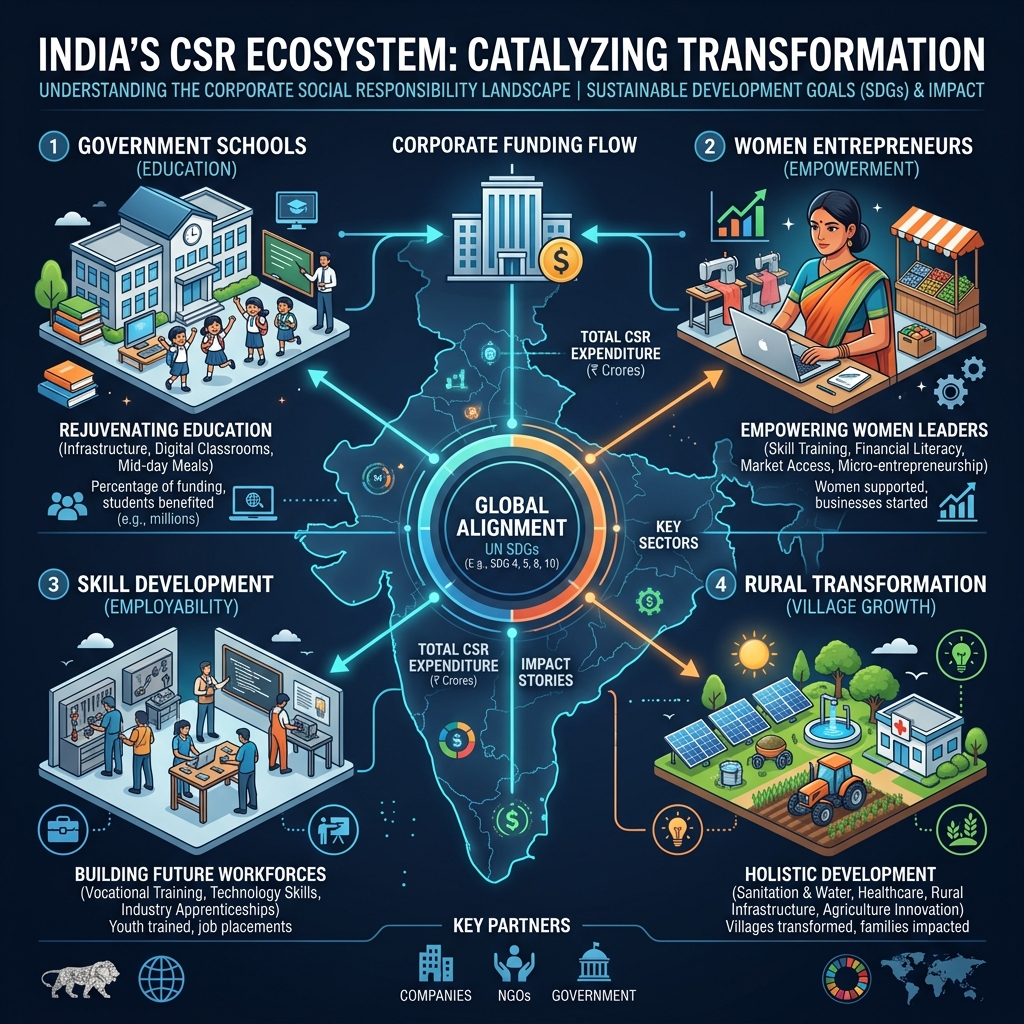
India's legal framework under the Companies Act 2013 generates substantial social development funding annually. Education and skill development programs receive a significant portion of this spend, highlighting the opportunity to align corporate budgets with regional development priorities.
The total annual corporate social responsibility funding generated by companies in India.
The proportion of total CSR funds allocated to education reform and skill development programs.
Activities listed under the Companies Act 2013, including poverty reduction, gender equality, and vocational skills.
Students and rural families who can benefit from coordinated CSR development programs.
Moving from Charity to Transformational Partnerships
Traditional donation-driven models often focus on short-term infrastructure setup, leaving projects vulnerable to disrepair without local maintenance. Shifting to an ecosystem-based, multi-year approach helps build sustainable local capacity.
Traditional CSR Models (CSR 1.0 / 2.0)
Donation-Driven
Issuing one-off checks to local projects without long-term tracking or integration with regional development goals.
One-Time Interventions
Short-term projects, such as donating classroom benches or paint, which fall into disrepair without local maintenance.
Infrastructure Focus
Focusing purely on building physical classrooms or labs, neglecting teacher training, digital access, and pedagogy.
Limited Measurement
Success is measured by inputs (amount spent, benches donated) rather than learning outcomes or income increases.
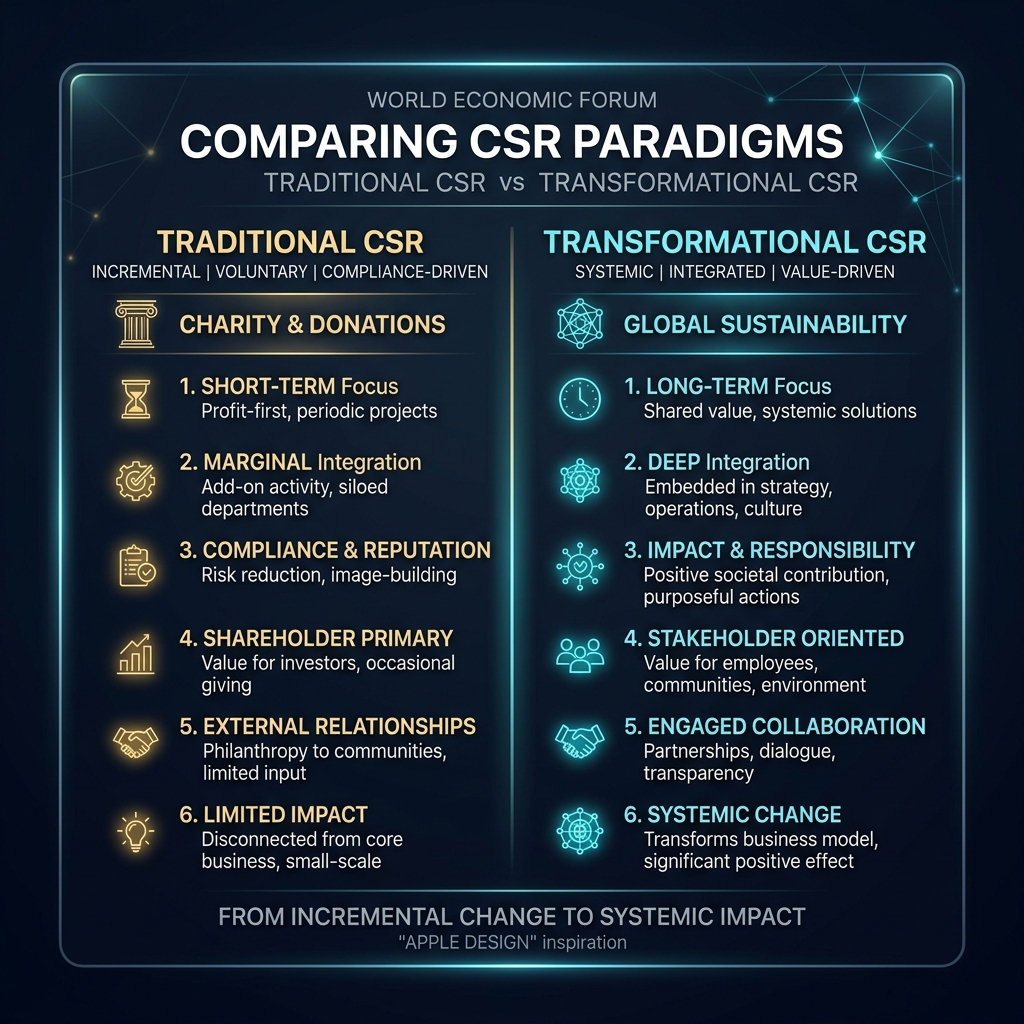
Transformational CSR Models (CSR 3.0 / 4.0)
Ecosystem Integration
Aligning corporate funding with district education goals, creating unified, sustainable programs.
Multi-Year Partnerships
Supporting communities through 3-to-5 year development plans that build local capacity and teacher confidence.
Outcome Measurement
Tracking verified learning improvements, technical skills, and household incomes using digital dashboards.
Community Sustainability
Training local groups to manage school labs and micro-processing units, ensuring programs survive after the funding cycle.
The Evolutionary Stages of CSR in India
Corporate responsibility is transitioning from simple philanthropy (CSR 1.0) and compliance-based projects (CSR 2.0) toward integrated ecosystem models (CSR 3.0) that foster self-sustaining community development (CSR 4.0).
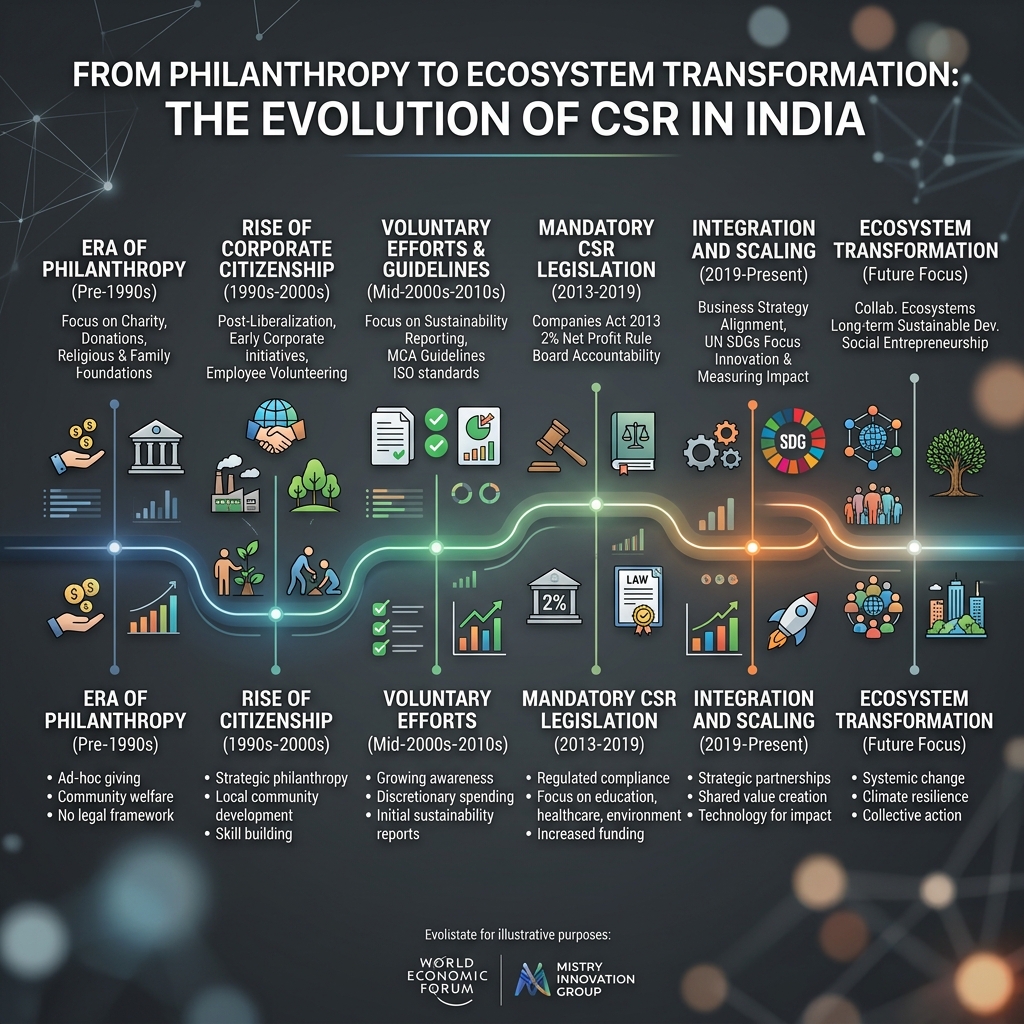
CSR 1.0: Philanthropy
Corporate Charity & Donations
In the early phases, corporate social responsibility was treated as charity. Companies issued occasional donations to schools or orphanages, focusing on public relations rather than measurable community development.
CSR 2.0: Project-Based Implementation
Compliance & Project Management
Following the Companies Act 2013, CSR became a regulatory requirement. Companies established projects with specific timelines and budgets, focusing on infrastructure construction (such as STEM labs or digital classrooms) under Schedule VII guidelines.
CSR 3.0: Ecosystem Integration
Multi-Stakeholder Collaboration
Corporates began coordinating their efforts with state governments and technical partners. By mapping CSR investments to public programs, they scaled reforms across entire districts, co-piloting educational updates and teacher training.
CSR 4.0: Community Transformation
Sustainable Grassroots Development
The modern model focuses on building self-sustaining community systems. CSR investments help rural groups establish cooperatives, digitize ledger records, and manage local assets, ensuring long-term regional development.
Education as the Multiplier of Community Growth
Educational investments have a strong multiplier effect, directly supporting youth employment, micro-enterprise growth, farming innovation, and overall public health access.
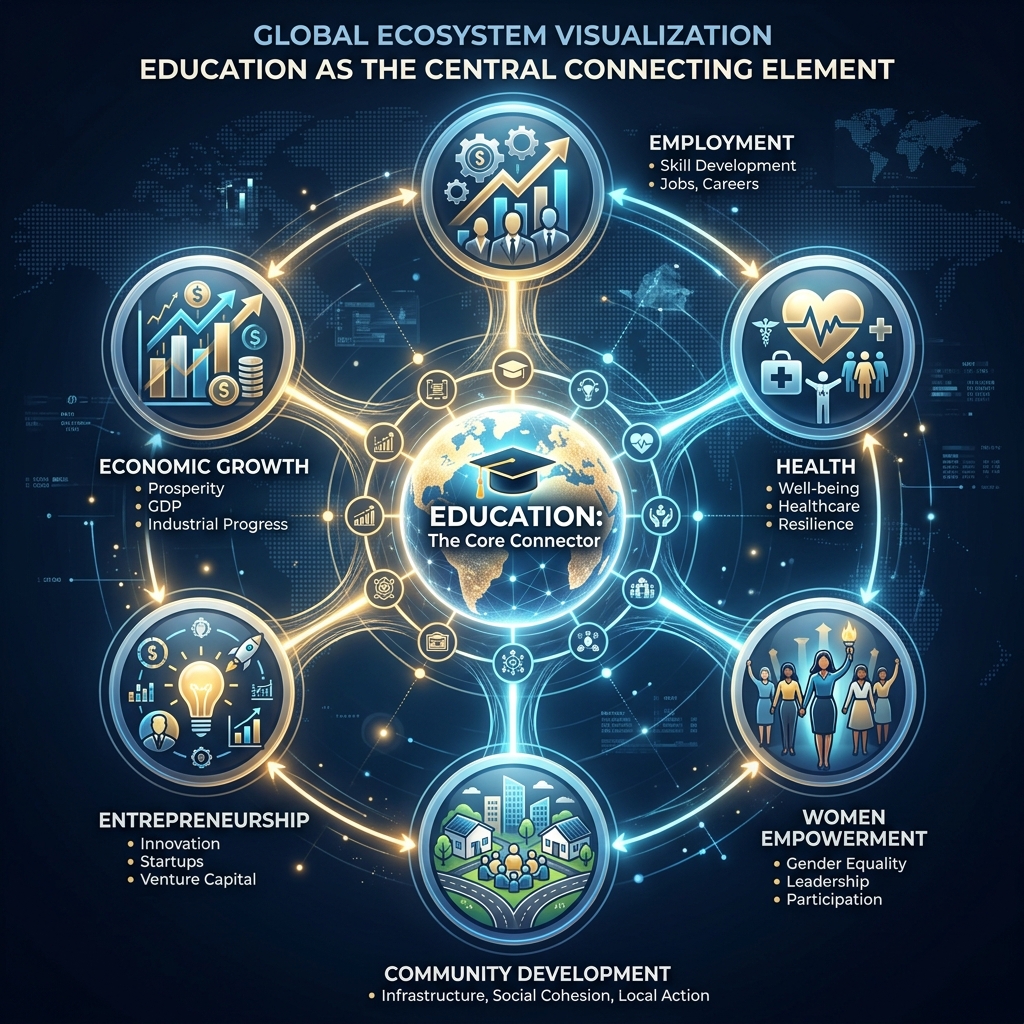
Sustainable Livelihoods
Education in digital skills and coding logic prepares youth to access remote contract work directly from their home districts.
Rural Micro-Enterprises
Skilling women-led cooperatives in financial accounting and digital payments allows them to build formal commercial businesses.
Agricultural Value Addition
Teaching farmers to use soil moisture sensors and solar processing setups triples crop margins and cuts harvest waste.
Improved Family Health
Digitally literate communities can access specialized medical advice through telemedicine networks, improving overall public health.
The Pragnova CSR Implementation Model
We coordinate physical lab setups, digital tablets, and micro-processing equipment with state-wide program goals, providing sponsors with audited verification of project outcomes.
FutureReady Schools™
Upgrading government schools with modular STEM labs, visual coding tools, and hands-on science packages.
FutureReady Skills™
Offering vocational technical tracks in drone operations, GIS data mapping, and digital platforms for rural youth.
FutureReady Enterprises™
Supporting weaver and craft collectives with modern design palettes and direct e-commerce pipelines.
FutureReady Foodpreneurs™
Helping rural farming cooperatives install solar-powered dehydrators and processing units to process crops locally.
Impact Dashboard™
Providing corporate sponsors with transparent, GIS-mapped dashboard updates to monitor learning and livelihood metrics.
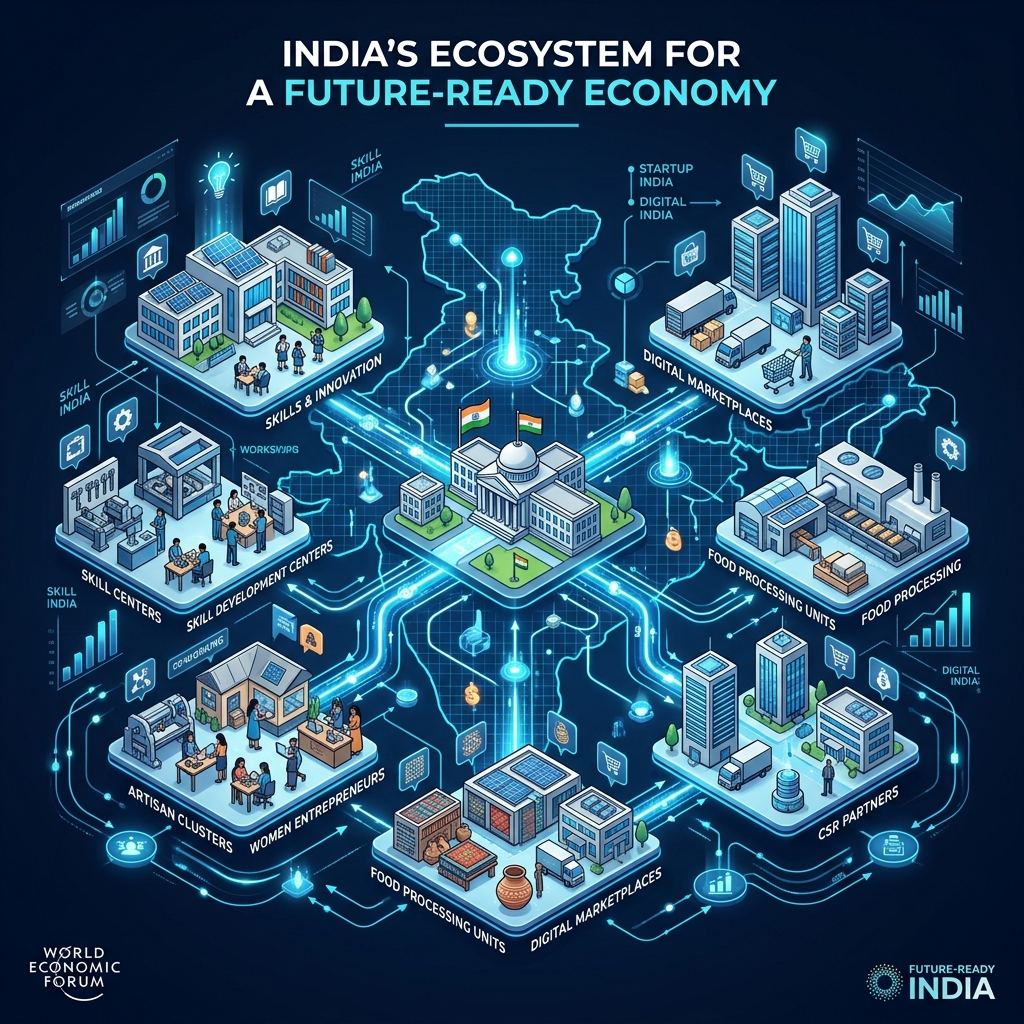
Unified tracking connecting public classrooms, artisan groups, and micro-processing hubs.
High-Impact Social Development Opportunities
We identify and manage social development programs across key focus areas, allowing corporate sponsors to target specific block requirements.
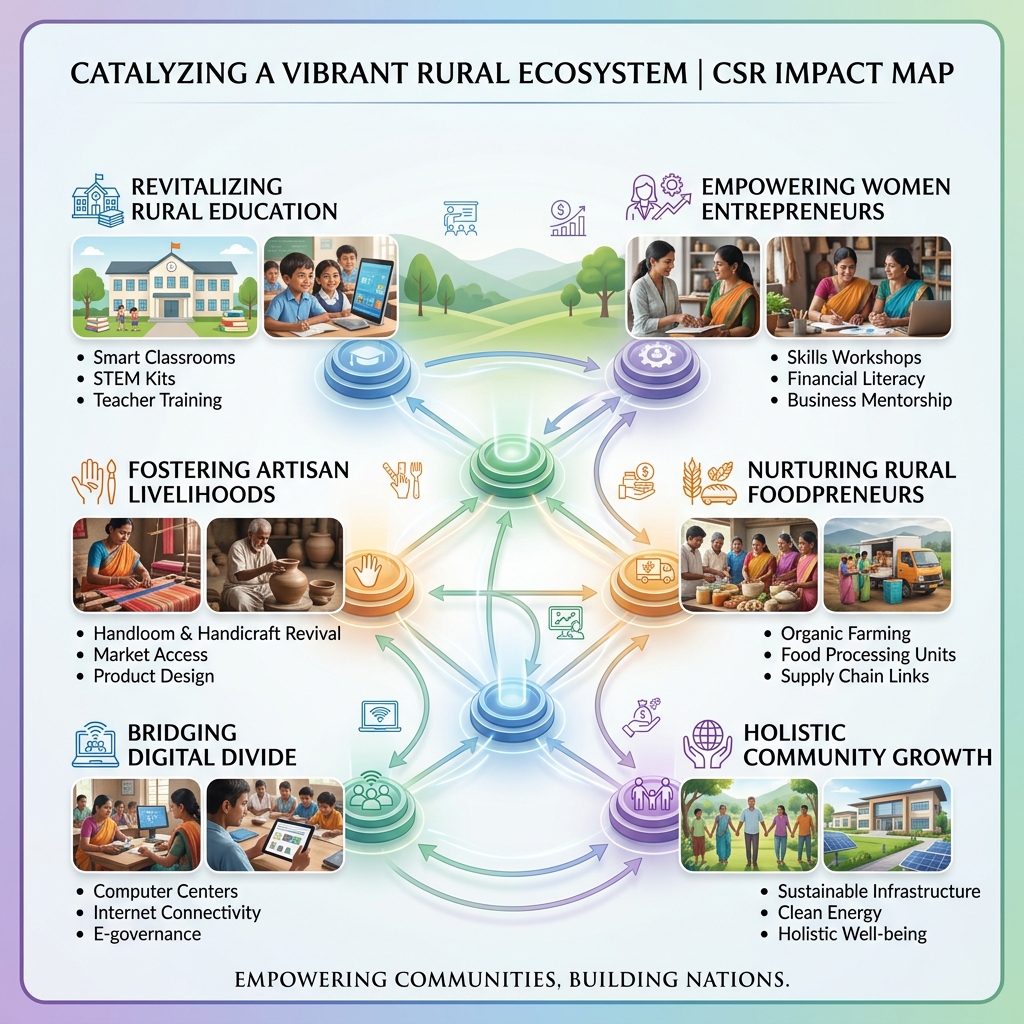
State Focus Areas: Livelihoods & Education
We coordinate program implementations across Odisha, Rajasthan, and Maharashtra, aligning our educational and enterprise development systems with regional economic priorities.
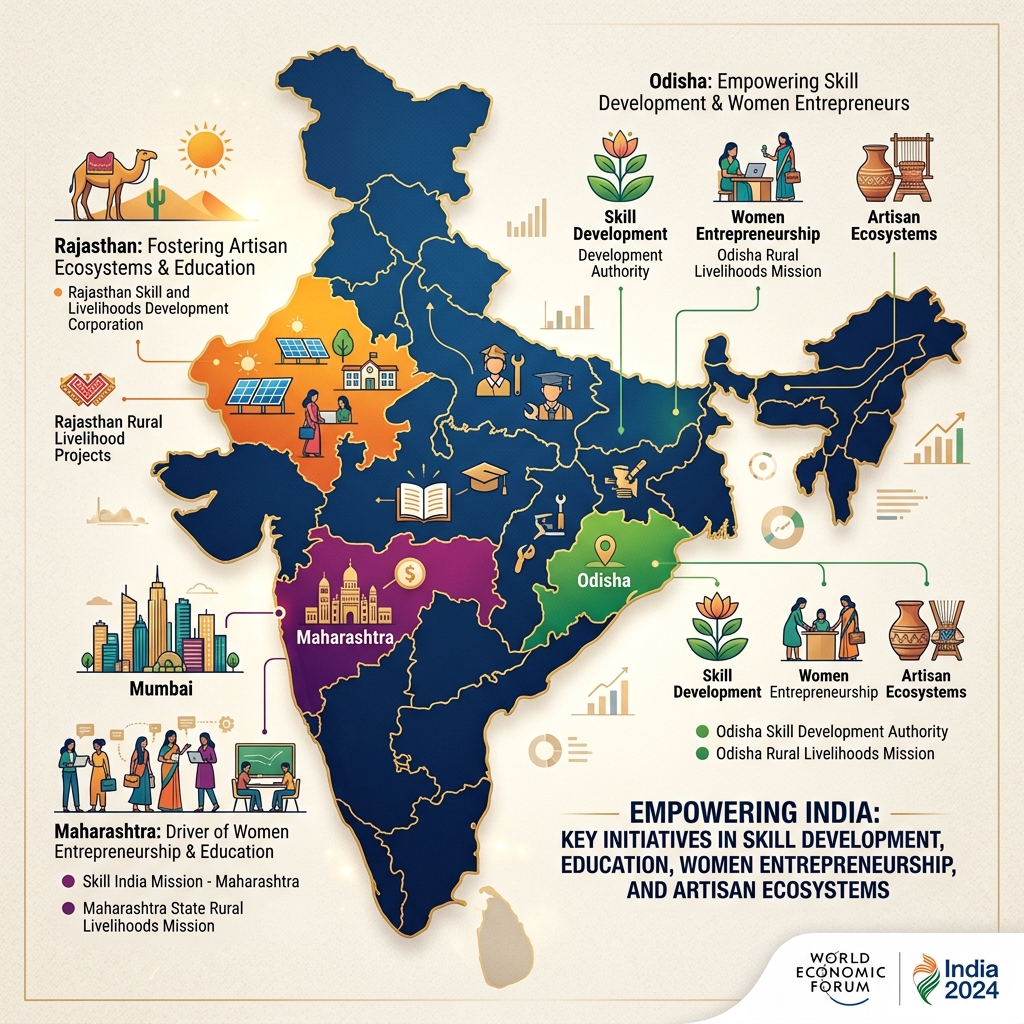
Odisha
Focusing on scaling modular STEM labs and digital coding programs across public schools, coordinating training with local block officials.
Rajasthan
Supporting weaver cooperatives with modern color stories and ergonomic loom upgrades while providing digital design tools to classrooms.
Maharashtra
Transitioning traditional self-help groups into formal business collectives, setting up shared solar-powered processing units.
Transparent Outcome Tracking with the Impact Dashboard™
We use GPS-tagged updates and regular progress logs to show sponsors live metrics on school lab usage, teacher progress, and local cooperative transactions, providing auditable verification of project outcomes.
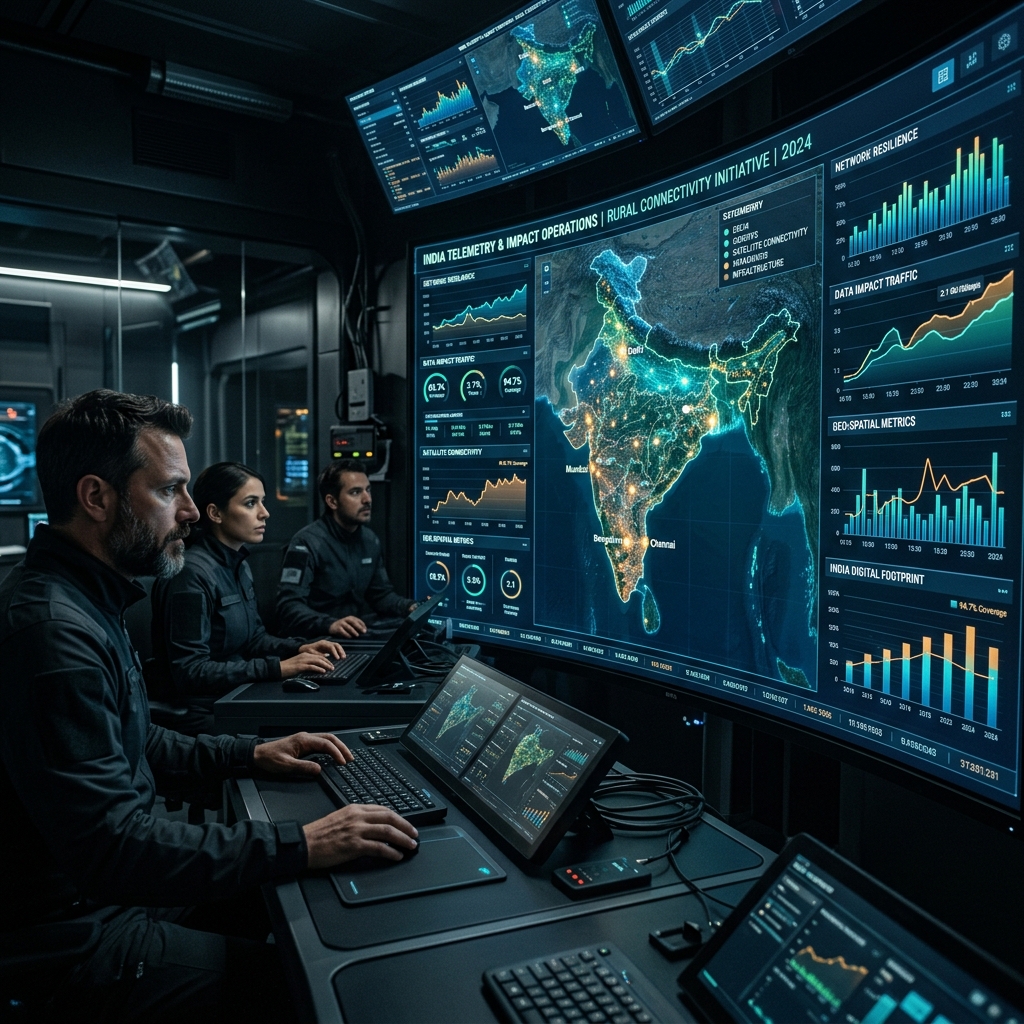
Auditable reporting showing verified metrics on school attendance, technical skilling, and micro-enterprise revenue.
Our Vision for CSR-Led Transformation
We work to ensure that by 2035 corporate social responsibility programs serve as key drivers of district-wide educational and economic upgrades.
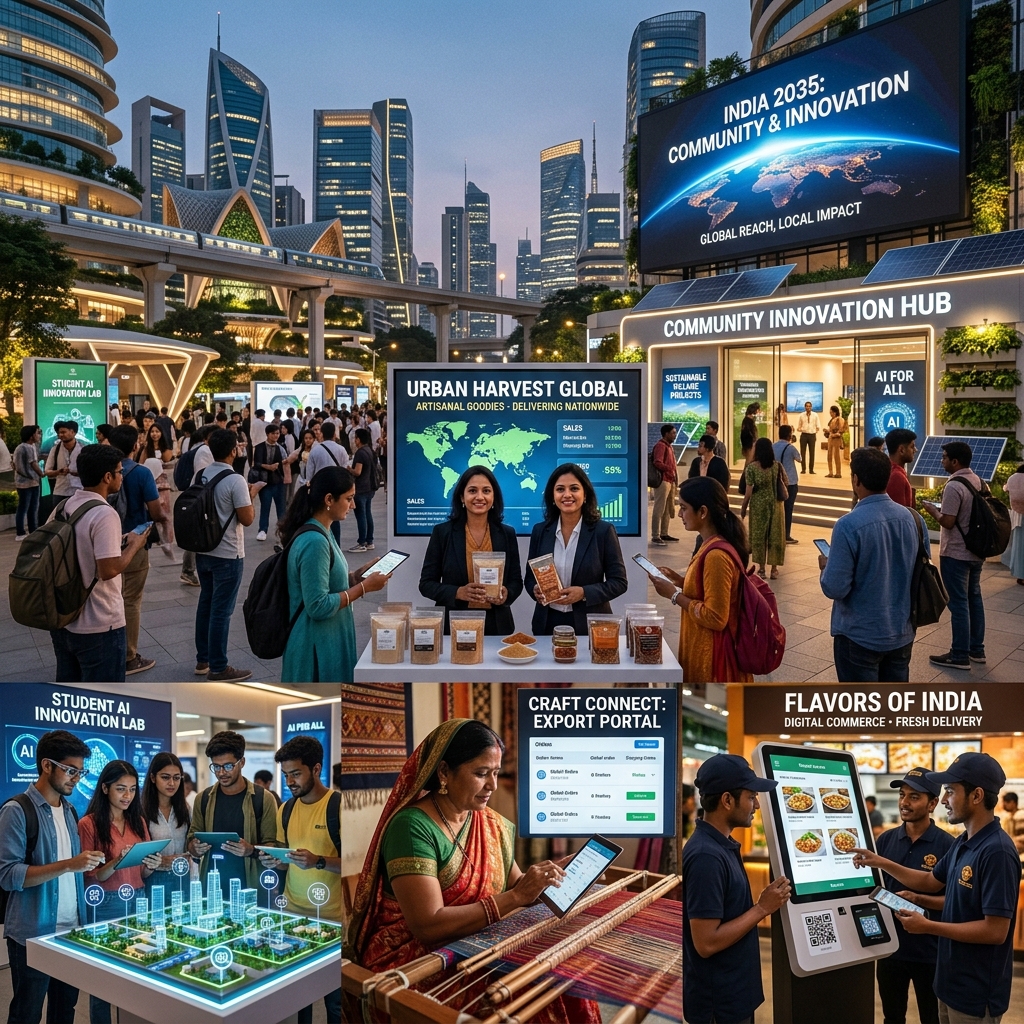
The Sustainable Community Enterprise
An integrated regional model connecting transformed schools, women-led processing units, and cooperative brand marketplaces.
“The future of CSR is not funding projects. It is building ecosystems that create prosperity.”
Social development achieves stable impact when corporate funding, government goals, and local ownership coordinate to build self-sustaining community networks.
Models & Lessons from India's Leading Foundations
We study and adapt successful implementation strategies from India's leading corporate foundations to design scalable educational and enterprise development programs.
Tata Trusts
Tata Trusts pioneered the integration of school-level digital skilling with rural economic programs. Their models show that when educational upgrades are matched with family livelihood programs, student attendance rates and learning outcomes improve together.
Adaptable model for large-scale district implementations.
CSR Compliance & Strategy Q&A
Answering common regulatory and implementation questions for corporate foundations and ESG leaders.
Ready To Build The Future Through CSR?
Partner with our program coordinators, technical implementation groups, and compliance auditors to establish high-impact, outcome-linked programs.