

From Artisan To Global Brand
Reimagining India's Craft Economy Through Design, Technology and Market Access
The future of India's artisan economy lies not in preserving crafts as heritage alone, but in transforming artisans into creators of globally admired brands.
The World's Largest Creative Economy
India's artisan economy connects over 7 million craftspeople, representing a major cultural and export potential. Aligning these craft clusters with government initiatives like One District One Product (ODOP) helps cooperatives scale and reach premium global markets.
The registered base of traditional craftspeople operating across major Indian craft clusters.
The growing global luxury and handmade market, representing a major export pipeline.
The proportion of retail craft margins captured by traders rather than the artisans.
The multiplier increase in direct household earnings achieved through brand ownership and digital markets.
Addressing Gaps in the Craft Supply Chain
While artisans produce high-value handcrafted products, they rarely capture the full retail margin due to a reliance on middlemen and a lack of direct marketing channels.
Traditional Craft Supply Chain
Traders Dictate Prices
Local traders buy raw craft outputs at low wholesale prices, leaving artisans with thin margins.
Outdated Product Styling
Producing repetitive designs that fail to match modern global home decor or fashion preferences.
Zero Customer Data
No direct contact with consumers, leaving artisans unaware of changing retail buying habits.
Preserved as Heritage Only
Treating crafts purely as charity or museum heritage rather than commercial luxury assets.
Direct-to-Consumer Ecosystem
Direct Margin Capture
Connecting artisan cooperatives directly with urban retail buyers and e-commerce platforms.
Design Modernization
Upgrading traditional craft forms with modern color stories and premium utility designs.
Direct Customer Feedback
Using digital marketplaces to monitor consumer preferences and adjust designs dynamically.
Creative Livelihood Brand
Positioning artisans as creative directors and founders of globally recognized brands.
The Evolutionary Journey of the Artisan
We guide traditional craftspeople from manual technical work (Maker) toward modern design customization, business management, and brand leadership (Brand Founder).
1. The Maker
Technical Craft Execution
The artisan operates as a manual laborer, executing traditional patterns passed down through generations without modifying designs or naming their own prices.
2. The Creator
Creative Input & Interpretation
Artisans introduce personal design interpretations, selecting custom colors and material combinations to improve the visual appeal of their crafts.
3. The Designer
Modernizing Utility & Styling
Integrating traditional skills with modern guidelines, developing handcrafted products designed specifically for contemporary global lifestyles.
4. The Entrepreneur
Direct Sales & Digital Management
Artisans manage customer relationships directly, listing inventories on digital marketplaces and tracking digital transaction ledgers.
5. The Brand Founder
Centralized Scale & Global Outreach
Leading cooperative brands and community enterprises, exporting standardized luxury crafts globally under unified brand names.
Design: The Missing Component in Craft Livelihoods
Traditional craft forms require more than just technical preservation. By modernizing styling, packaging, and brand storytelling, cooperatives can position their products as premium home decor and lifestyle goods.
Premium handcrafted pottery with customized branding and organic eco-friendly packaging.
Connecting Craft Cooperatives to Global Buyers
We train artisan groups to list inventories on digital platforms, accept digital payments, and use social channels to share their craft stories, bypassing middlemen and selling directly.
Cooperative weavers tracking global customer orders on mobile storefront dashboards.
One District One Product Opportunities
Our programs operate across major craft blocks in Odisha, Rajasthan, and Maharashtra, aligning technical training with government ODOP guidelines to help cooperatives access common facility hubs.
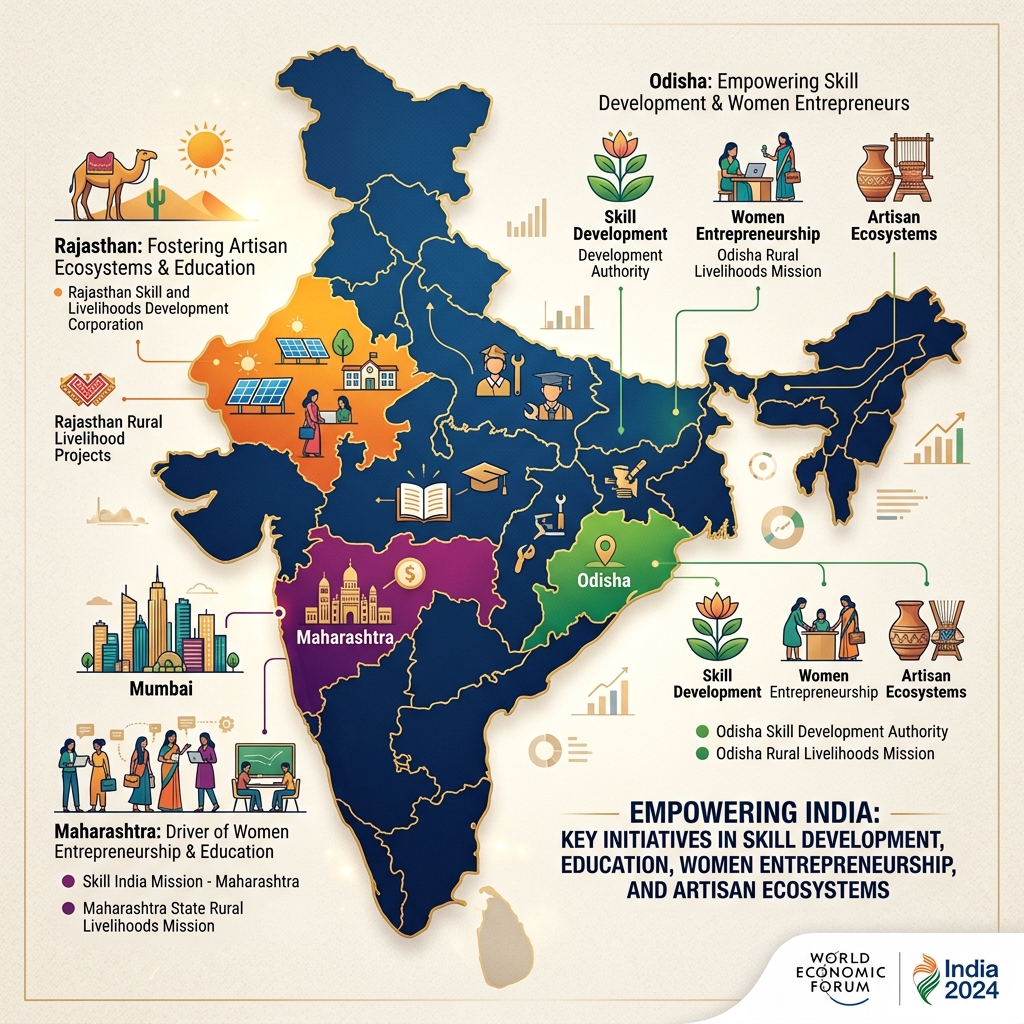
Odisha
Upgrading government schools with hands-on maker spaces and offline-friendly coding platforms.
Rajasthan
Supporting weaver collectives with modern color palettes, design skilling, and direct e-commerce pipelines.
Maharashtra
Helping women's self-help groups digitize ledger records, standardize processing quality, and register formal businesses.
The RajasthaniHaat E-Commerce Pipeline
We coordinate artisan training through seven development phases, connecting traditional craftsmanship directly with premium market sales.
1. Learn
Modern design & color principles.
2. Design
Custom prototyping for global buyers.
3. Create
Executing high-quality craft production.
4. Brand
Creating custom logo and story assets.
5. Package
Eco-friendly, durable packaging design.
6. Sell
Listing on e-commerce channels & ONDC.
7. Scale
Building transaction history for bank credit.
Supporting Women-Led Craft Collectives
Supporting women-led self-help groups with digital literacy, mobile bookkeeping software, and WhatsApp Business training allows them to sell directly on e-commerce channels and ONDC.
Women cooperative managers tracking transaction histories on mobile bookkeeping interfaces.
Introducing FutureReady Markets™
Our centerpiece model coordinates digital logic, agricultural processing, and brand design, providing rural communities with verified economic opportunities.
Design & Palette Customization
Upgrading traditional craft forms with modern color stories and premium utility designs.
Brand & Identity Development
Helping weaver and craft cooperatives modernize product palettes, product photography, and packaging design.
Direct E-Commerce Integration
Connecting artisan and food cooperatives directly to national retail pipelines via RajasthaniHaat.com and TalesOfSpices.com.
Export & Compliance Support
Skilling cooperatives in export quality guidelines, international shipping compliance, and custom certifications.
Centralized tracking connecting women-led enterprises, packaging hubs, and marketplaces.
Our Vision for Rural Livelihoods
We work to ensure that by 2035 rural districts can support local entrepreneurs, standardized artisan brands, food processing collectives, and digital enterprises.
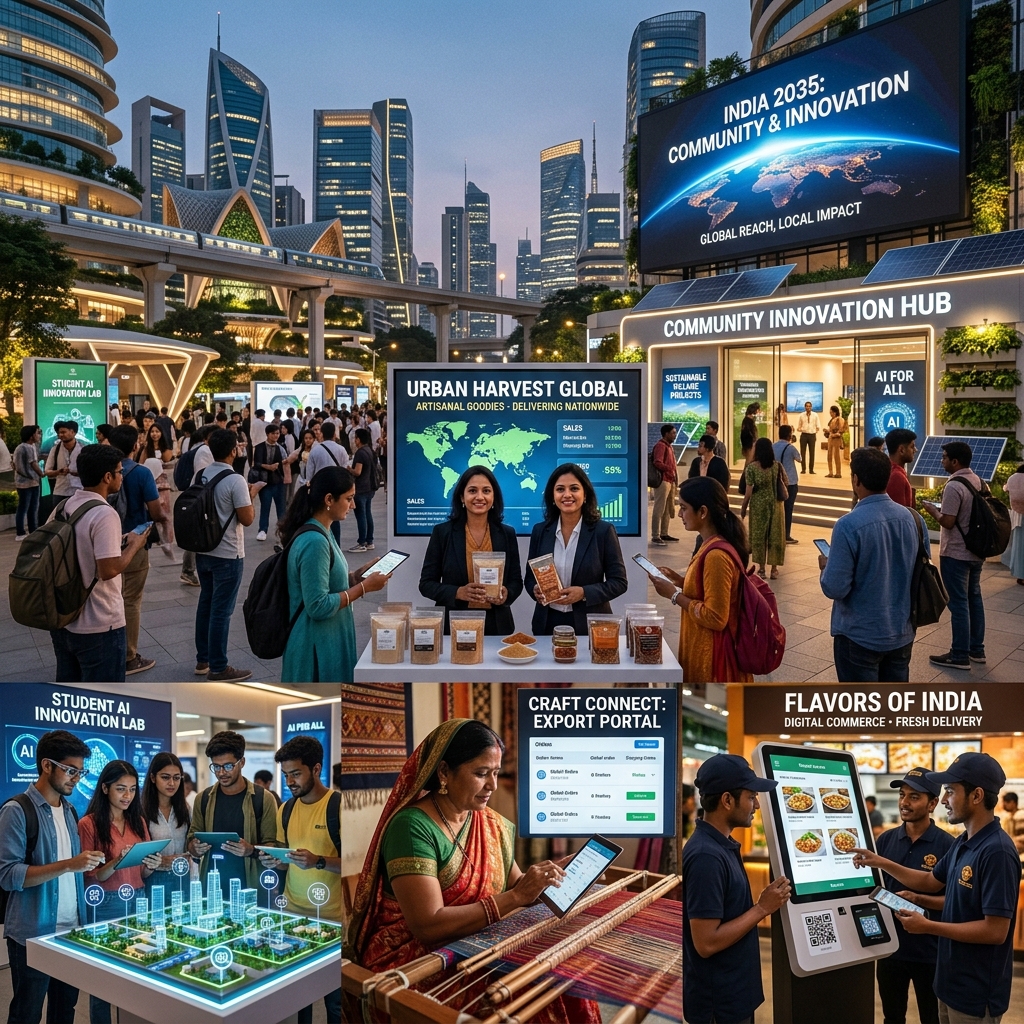
The Digitally Unified Cooperative
An integrated development model containing solar-powered processing labs, craft design hubs, and e-commerce packaging centers.
“The future of India's craft economy is not selling products. It is building globally admired brands rooted in culture and community.”
Real economic progress occurs when skilling, capital, and direct market access operate together to support artisan-led micro-enterprises.
Models & Lessons from India's Leading Cooperatives
We study and adapt successful implementation strategies from India's leading cooperatives and foundations to design scalable enterprise programs.
Jaipur Rugs
Jaipur Rugs removed middlemen by working directly with rural weavers. Their model demonstrates that providing raw materials, design guidelines, and global export access increases household incomes.
Adaptable model for large-scale district implementations.
Craft Livelihoods & Markets Q&A
Answering common questions about market-linked skilling, cooperative development, and rural micro-enterprises.
Ready To Transform Artisans Into Global Brands?
Partner with our program architects, technical facilitators, and marketing managers to implement outcome-linked craft livelihoods programs.